
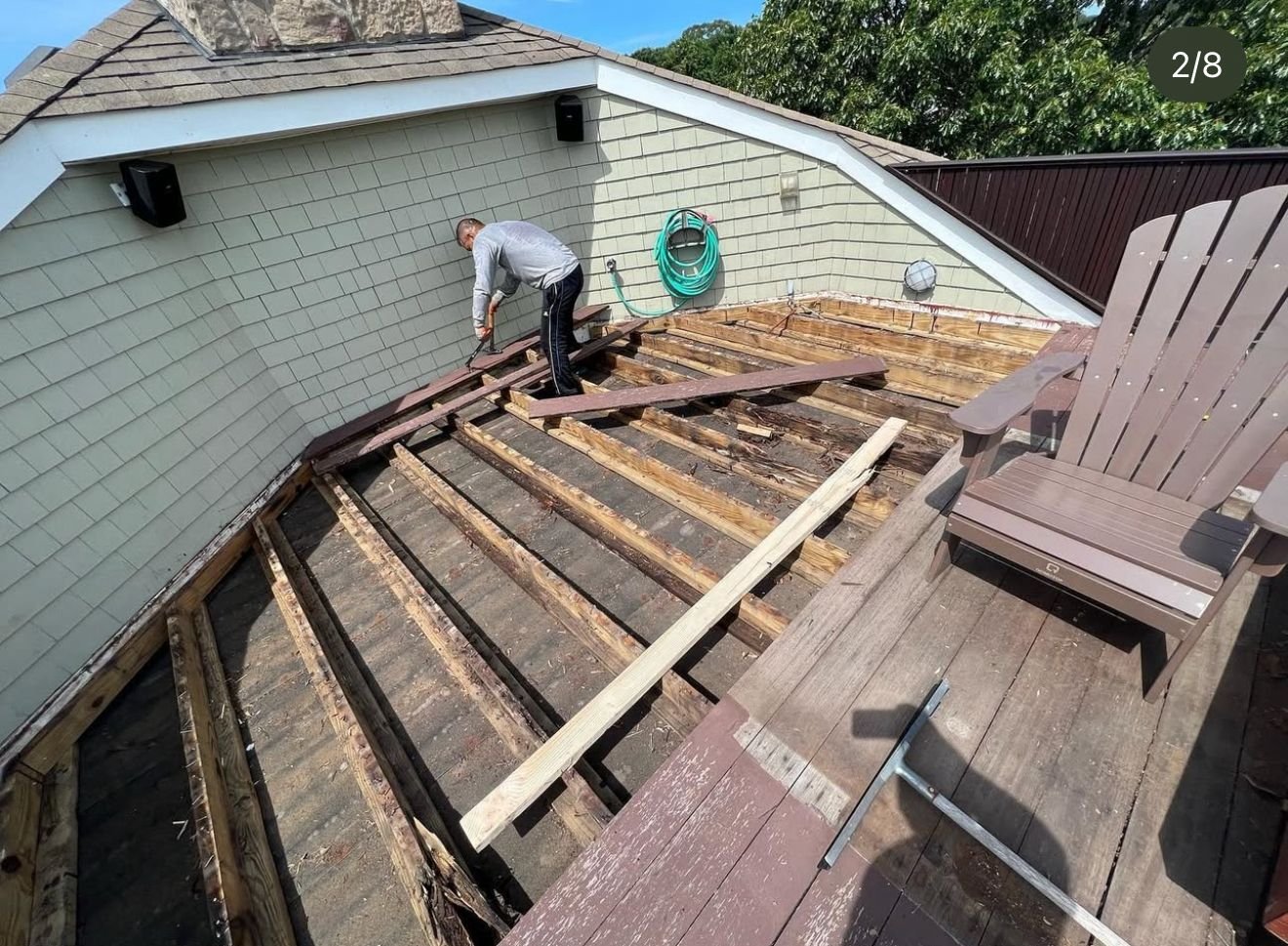

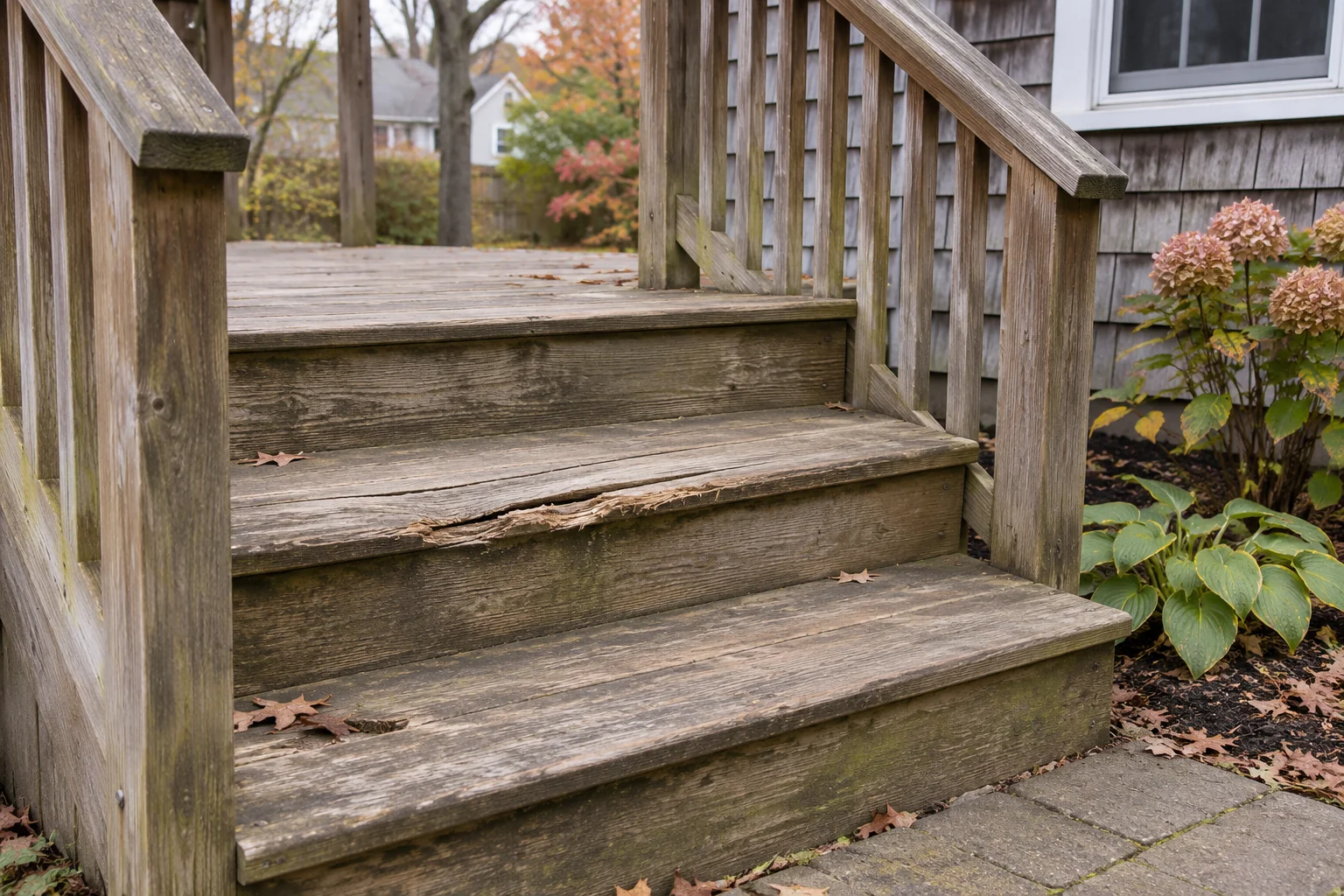
A split board on a deck step may look like a small repair. But replacing the visible board is only part of the decision. The supports beneath it, the connections, and the shape of the staircase also matter.
Deck stair-tread repair in Laurel, NY, should begin with an assessment of the affected step and the surrounding stair assembly. The goal is to understand why the damage occurred and what work will provide a suitable repair.
Golden Hands Deck provides deck services in Laurel, including repairs. Before arranging a quote, it helps to know what to report, what the contractor should assess, and why covering damage with paint is not a repair.
Understand which part of the step is damaged
The tread is the horizontal surface you step on. The riser is the vertical face between steps, where one is present. Beneath the treads, supporting members called stringers help carry the staircase.
These parts work together. A damaged tread may be a local board problem, or it may appear alongside issues elsewhere in the stairs.
When requesting an estimate, describe what you can see without taking anything apart. Explain whether the front edge is broken, a board is split, fasteners are raised, or a section has moved.
Take photos from a safe position. Include the whole staircase as well as the damaged area. A close-up can show the surface, but a wider view helps explain the layout and access.
Photos are useful for planning a visit. They cannot establish whether the stairs are safe or reveal every concealed condition.
Stop using a step that moves or appears unstable
If a tread shifts, gives way, or has a broken edge that affects footing, keep people away from it until it has been assessed.
Do not repeatedly step on the board to demonstrate the movement. Avoid leaning on a questionable railing while examining the stairs.
Tell the contractor whether the stairs provide a daily entrance or the only practical route between the deck and yard. Access planning may need to happen before repair work begins.
The North American Deck and Railing Association’s deck evaluation guide includes stairs, supporting components, decking surfaces, and handrail assemblies. That broader approach helps explain why a stair concern should not be judged only by the board visible from above. North American Deck & Railing Association
Do not remove treads yourself to make the damage easier to see. Leave access and any necessary opening-up work to the agreed assessment process.
Why new tread boards may not solve the whole problem
A replacement tread needs suitable support and fastening. If the wood beneath it is damaged or the connections are unsuitable, changing the walking surface alone may leave the cause unresolved.
A contractor may need to assess the stringers, their condition at the tread locations, and the way the staircase connects at the top and bottom.
The visible damage can also affect the repair area. A split near a fixing point deserves different consideration from ordinary surface wear.
Ask the contractor to explain whether the problem appears limited to individual tread boards or whether further assessment is needed. If concealed areas cannot be judged during the first visit, the quote should say so.
Golden Hands Deck’s deck-repair service covers the discussion of damaged boards and more extensive repair needs. The appropriate scope depends on the actual structure.
Keep the repaired staircase consistent
A new board should fit the staircase, rather than simply cover the damaged surface.
Adding another board over an existing tread can change the height of one step and the shape of its front edge. Choosing a thicker replacement without considering neighboring steps can also alter the walking pattern.
For that reason, a repair should consider the complete flight of stairs. Ask how the proposed work will preserve suitable step geometry and meet the requirements that apply to the project.
Do not assume that matching the old installation automatically establishes compliance. Likewise, a product sold as decking is not automatically suitable for every stair arrangement.
Avoid deciding on board thickness or layout before the contractor has reviewed the supports and the staircase as a whole.
Choose replacement material for its intended use
Wood and composite products have different installation requirements. Substituting one for the other is not just a color choice.
For wood, discuss the proposed material, dimensions, finish, and suitability for the repair. For composite, identify the exact product and its stair-installation instructions.
The contractor should check the support arrangement against the selected material’s requirements. A product that works on the main deck may need a different arrangement on stairs.
Appearance matters too. A new wood tread may stand out against weathered boards. Composite colors and profiles can change or become unavailable over time.
Ask to see the proposed material before ordering. A sound repair may still remain visually noticeable, so agree on a realistic appearance rather than expecting an exact match.
Separate tread repair from railing work
A damaged tread and a loose railing may need attention during the same project, but they are different parts of the scope.
Tell the contractor about both concerns. Do not assume that repairing the tread includes securing posts, replacing balusters, or changing a handrail.
The written estimate should identify which components are included and explain any related work needed to complete the repair.
This distinction matters when comparing prices. One quote may include only surface boards, while another allows for additional stair and railing work.
Ask what can be assessed before work starts and what may remain uncertain until damaged material is removed. Agree on how any additional findings will be photographed, explained, and approved.
Plan access at your Laurel property
Even a small staircase repair can interrupt a familiar route.
Before work begins, discuss which doors and paths will remain available. Explain how children, pets, visitors, or anyone with limited mobility normally reaches the yard.
Do not assume partially completed stairs can be used between visits. Follow the contractor’s restrictions until the relevant area is ready.
For a Laurel home used seasonally, make sure the person meeting the contractor knows the property and can explain earlier repairs. Share any invoices or photos showing changes to the staircase.
Clear furniture and portable items from the agreed work area when it is safe to do so. Leave structural pieces and damaged boards in place unless their removal is part of the agreed work.
Know what should affect the repair quote
The number of tread boards is only one cost factor.
Access to the underside, removal of damaged material, the condition of supports, material availability, and related railing work can all affect the scope.
Ask whether the quote includes disposal, fastening materials, surface preparation, and finishing. Confirm who will check any permit requirements for the proposed work.
If painting or staining is planned, discuss whether it can happen immediately or needs a separate schedule based on the material and coating instructions.
A clear quote should describe the intended result and its limits. It should not promise that replacing one board will resolve conditions that have not yet been assessed.
Inspect the finished work before returning to normal use
At handover, ask the contractor to explain what was repaired and whether any other concerns remain.
Keep the written scope, material details, and care instructions with your property records. These can help with future maintenance and matching replacement parts.
Confirm when the staircase can return to normal use, particularly if a finish has been applied. Ask what changes should prompt another assessment.
For deck stair-tread repair in Laurel, NY, request a free written estimate from Golden Hands Deck or call 631-655-5616. Share photos of the stairs and explain any movement, broken edges, or access concerns so the visit can focus on the repair your property needs.
Share
Related Posts
November 11, 2026
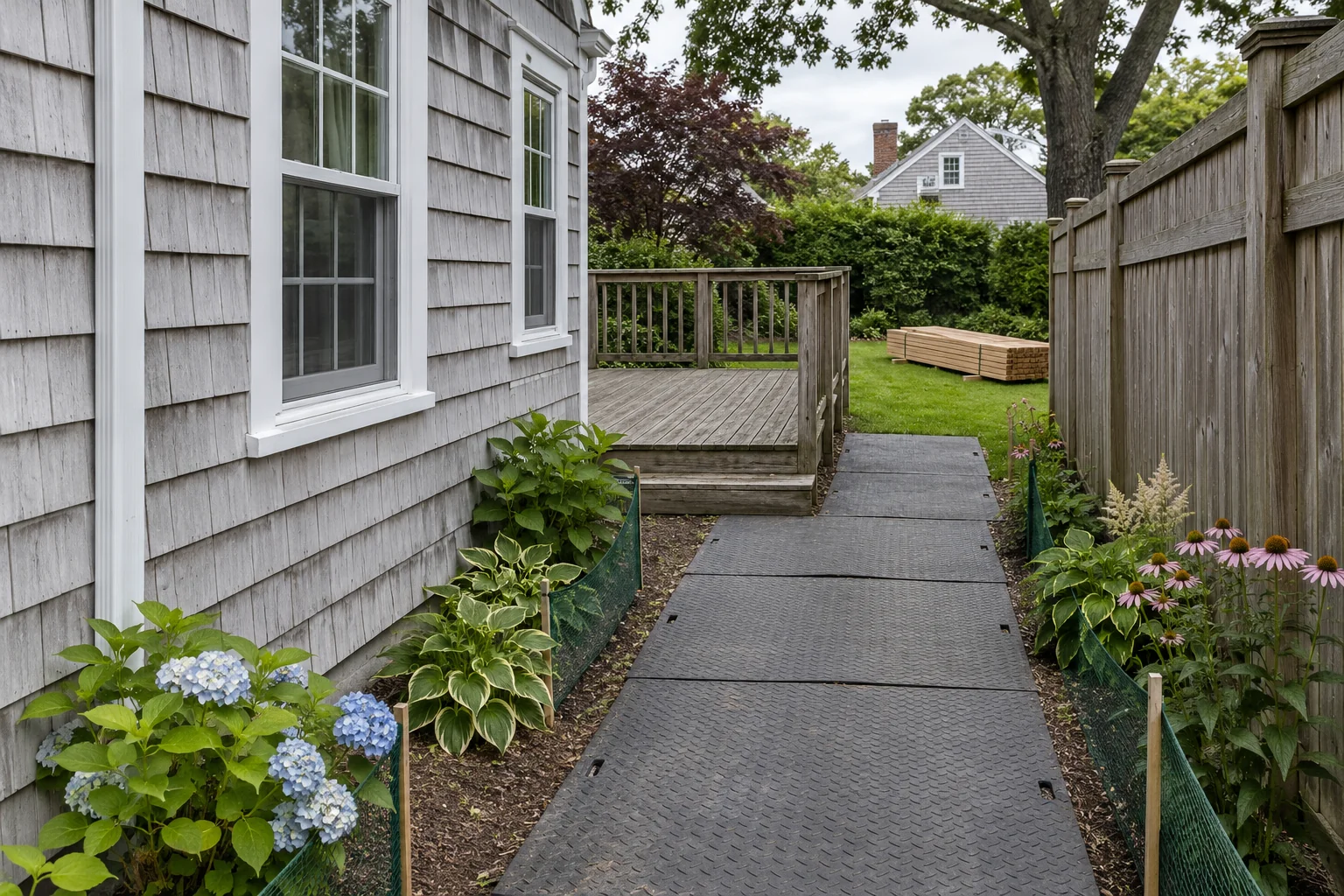
Deck Replacement in East Quogue, NY, With Narrow Yard Access
A narrow gate does not automatically rule out replacing your backyard deck. But it can…
November 10, 2026
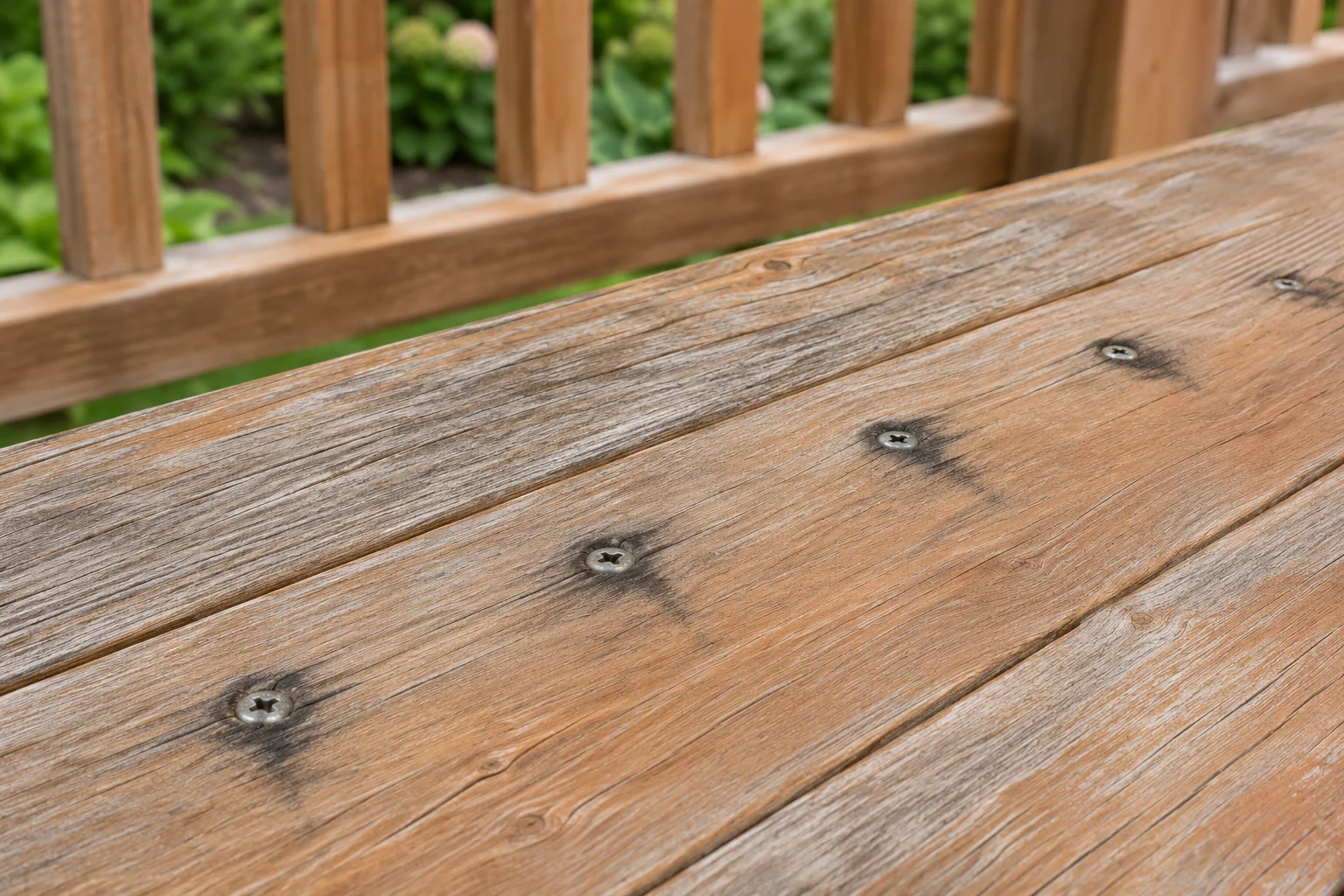
Cedar Deck Repair in Cutchogue, NY, for Black Screw Stains
Small black rings around deck screws can stand out against cedar’s warm grain. Sometimes they…
November 4, 2026
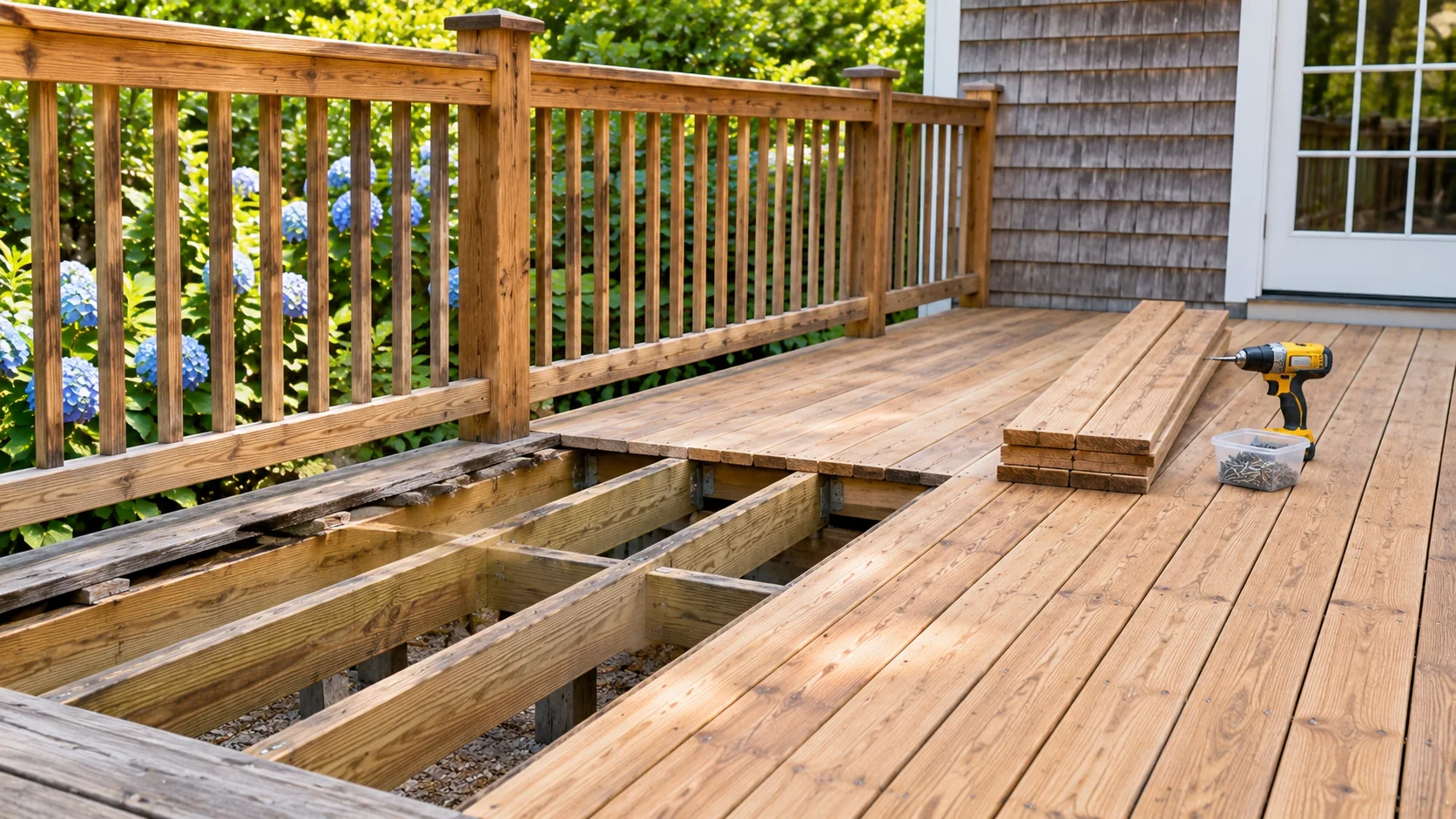
Deck Board Replacement in Mattituck, NY: Can You Keep Your Existing Deck Frame?
Deck board replacement in Mattituck, NY, can give an aging outdoor space a fresh appearance…


