

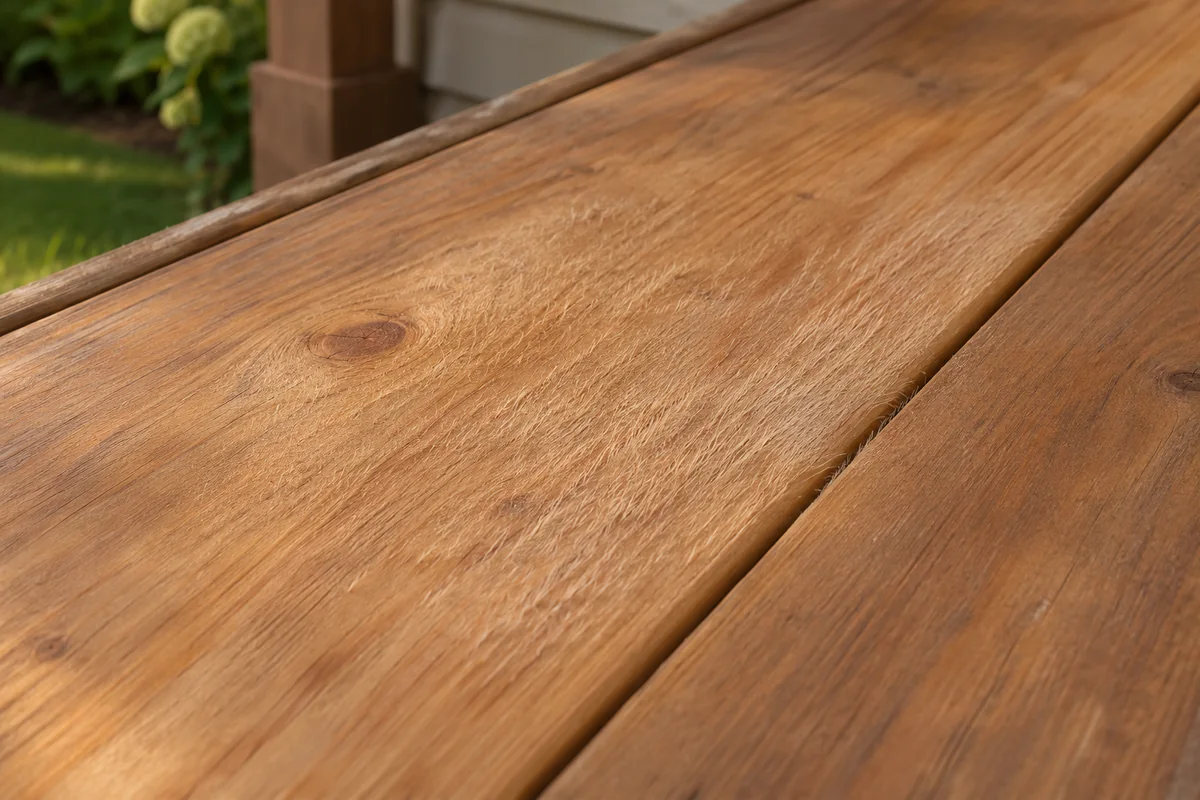
A fuzzy cedar deck in Eastport, NY, may look clean after washing and still feel rough once it dries. Fine wood fibers can stand up on the surface and catch the light. If the roughness appeared right after cleaning, stop washing and let the wood dry before deciding what to do. Look for short fibers that follow the grain and for deeper damage, such as grooves or split board edges.
The difference matters when you ask for a quote. A few rough patches on sound boards may need surface work before you stain. Sharp splinters, loose boards, or soft wood may need repair first. You can give the contractor a better starting point by showing where the roughness appeared and explaining how the deck was cleaned.
Wait for the boards to dry before you judge the surface
A wet cedar board can look darker and more even than it does dry. Give the deck time to dry, then look across the boards from a low angle in daylight. Raised fibers can look like short pale hairs that follow the wood grain. If a spot is simply lighter in color and the surface looks smooth, it may be a change in the old finish or the color of the wood that cleaning exposed.
Take one close photo and one that shows where the patch sits on the deck. Check whether the roughness stops at a board edge, shows up in overlapping bands, or covers most of the floor. If you have photos from before the wash, compare the same area. That can show whether a pale strip is new or was already there.
What can cause fuzz on a cedar deck after washing
Hard spraying or scrubbing can disturb the top fibers on cedar. A wash may also expose loose fibers on wood that had already weathered. Some cleaners can remove wood from a weathered surface, especially if they are used in a way the product label does not call for. The Western Red Cedar Lumber Association advises against using a power washer on cedar decking because it can damage the surface. See its cedar deck care guide.
If you used a cleaner, keep the label or take a photo of it. Write down which parts you treated first and whether you went over any spots again. Tell the crew if the deck was bare, stained, or painted before cleaning. The same light patch can look different on bare wood than on a deck where some of the old coating came off.
Telling raised grain from damage that needs repair
Surface fuzz is usually made up of fine strands along the grain. A sharp ridge, a gouge you can see in side light, or a broken board edge calls for a closer look. Pay attention to the stair treads and the route from the house to the yard, where people are more likely to step on a damaged spot. Keep foot traffic away from loose boards or sharp, lifted edges until they can be checked.
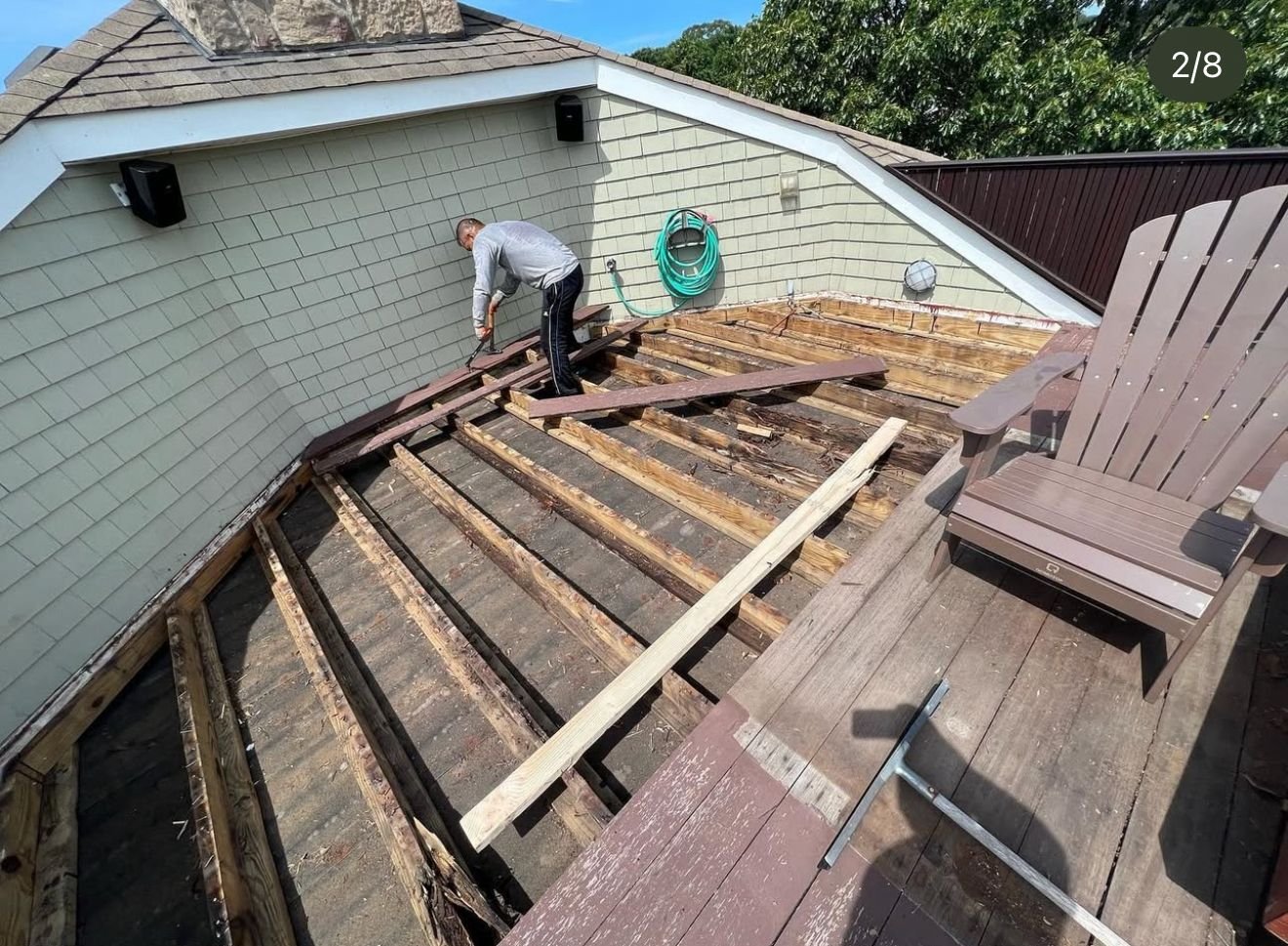
Soft spots, deep cracks, or boards that shift during normal use may point to a separate repair. A close photo can show the condition of the surface. An on-site visit lets the crew check the board and the parts beneath it. If you see more than scattered surface fibers, take a look at Golden Hands Deck’s deck repair service.
What to check before sanding or staining cedar
If the wood is sound and only the top fibers are rough, smoothing a small test area can show what the finished surface might look like. Ask how the crew will prepare the area for the finish you want. A sanding method that works on bare wood may leave a visible patch beside an old stain. Trade guidance discusses removing raised fibers before refinishing in this Professional Deck Builder guide.
Look at the prepared test area alongside the rest of the same board in daylight. If you are keeping the old color, ask whether a new coat will blend or whether it makes sense to refinish whole boards up to their seams. Follow the finish maker’s guidance on wood moisture and weather before staining. Shaded boards may need more time to dry than open boards in the same yard.
Decide how much of the floor to refinish
If the fuzz is near one stair or in a strip beside the house, ask the crew to show where the repair would end. A natural break such as a board seam or a stair edge may make a touch-up less noticeable. If rough patches are scattered across several rows, compare a price for treating those rows with a price for refinishing the whole walking surface. Include any boards that were replaced during earlier repairs in the test area if their color or grain differs. They may take stain differently from the older cedar. The sample can help you decide whether one finish will suit the floor.
Plan for cleanup before washing again
Another hard wash can roughen the cedar further. If more cleaning is needed, ask what method suits the wood and old finish. Find out how the crew will collect loose finish chips and keep any cleaning solution or dirty rinse water from reaching a nearby storm drain. That matters if the deck drains toward a driveway or a paved path that leads to the street. For county guidance on what can reach storm drains, see Suffolk County’s stormwater program.
For regular care, a soft broom can clear loose leaves before they build up by the steps or under furniture. If a damp patch returns in the same place, note what is above and around it. A planter, a rug, or a roof drip may change how that part of the deck dries. Share those details before you agree to another cleaning or a new finish.
What to ask for in an Eastport cedar deck repair estimate
Ask the contractor to show you which boards can be cleaned up, which could need a new finish, and which should be replaced. One quote may cover a few patches while another includes a full stretch of the floor so the finish looks even. The amount of old coating, the number of stair treads, and the condition of the boards all affect the work and the price. If replacement boards are needed, ask how they’ll match the existing deck’s width and thickness. Read more about Golden Hands Deck’s cedar decking service. For a project that extends beyond the floorboards, see the company’s deck services in Eastport.
If your cedar deck in Eastport, NY, feels fuzzy after washing, Golden Hands Deck can look at the rough areas and explain what can be refinished and which boards may need repair. Call (631) 655-5616 or request a free written estimate.
Share
Related Posts
November 23, 2026
Deck Replacement Beside a Low Patio Door in Amagansett NY
If you’re planning a deck replacement in Amagansett, NY, and your patio door sits close…
November 20, 2026
How to Plan Deck Delivery Access on Shelter Island, NY
Before you order boards for a deck replacement on Shelter Island, walk from the driveway…

November 17, 2026
Cedar Deck Restoration in Peconic, NY – Bring Your Wood Deck Back to Life
A faded, rough or discolored cedar deck does not necessarily need to be replaced. With…
November 16, 2026
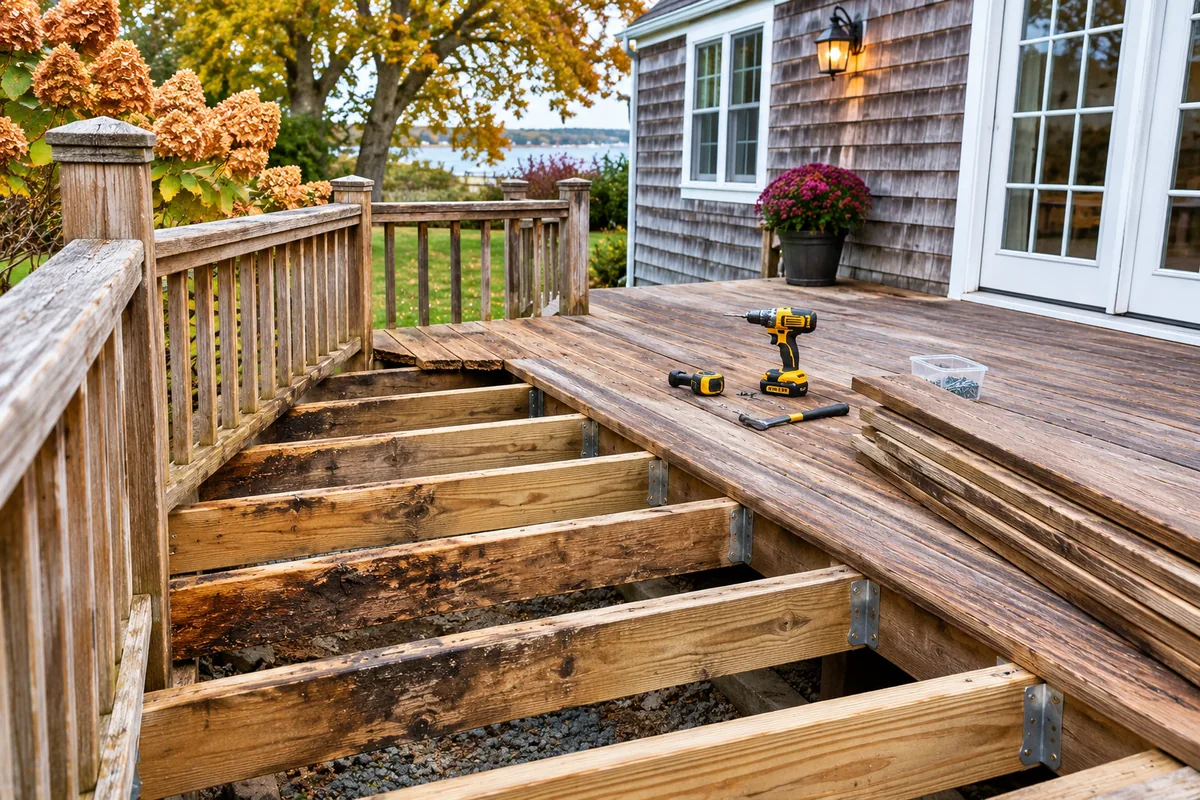
Deck Joist Repair in Mattituck, NY – Fix Hidden Structural Damage
A deck does not have to look old to have structural problems. Even when the…


