

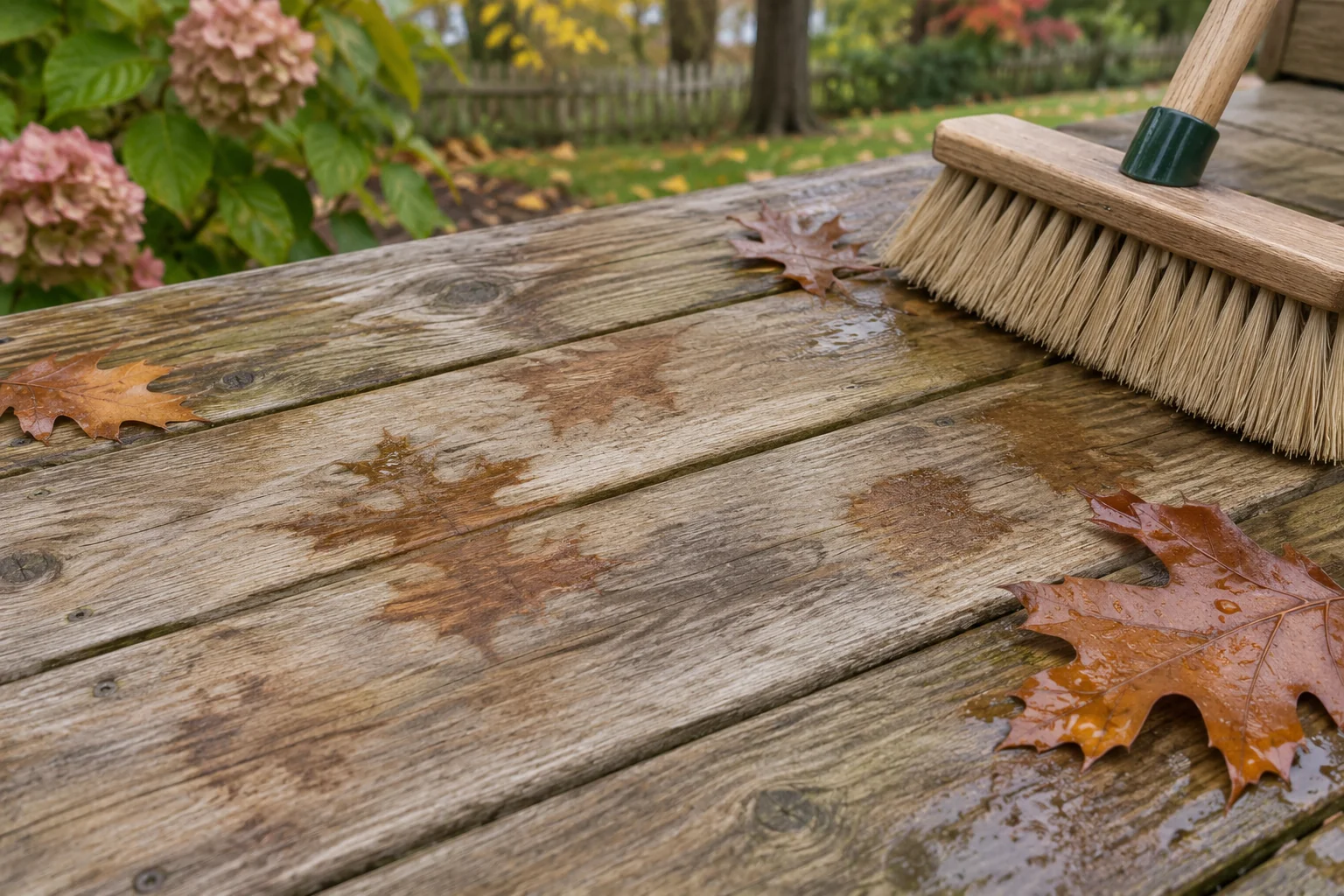
Wet leaves can leave a mark long after you sweep them away. Brown outlines, dark patches, and grime around planters can make an otherwise usable deck look neglected. But those marks do not all need the same treatment.
Deck cleaning in Greenport, NY, should start with two questions. What material are the boards made from, and what caused the discoloration? A cleaning method that suits one deck may damage another.
Golden Hands Deck provides deck services in Greenport, including cleaning and maintenance. Before arranging a wash, it helps to understand what cleaning can improve, which marks need closer attention, and why stronger pressure is not always the answer.
Why wet leaves leave marks on deck boards
Leaves can release natural compounds called tannins as they break down. When wet leaves sit against decking, they may leave brown stains or outlines. Dirt trapped beneath them can add another layer of discoloration.
The pattern gives you a useful starting point. A mark shaped like a leaf suggests a different issue from a long stain beneath a metal chair. A dark rectangle under a planter may involve trapped dirt, moisture, or the container itself.
Still, appearance alone cannot confirm the cause. A dark mark does not prove that a board has rot. Likewise, a surface that looks clean may still have damaged wood or loose connections.
Before cleaning, take a few photos and note where the marks appear. Tell the contractor whether they followed fallen leaves, a moved planter, a spill, or recent work nearby. That information can help narrow the cleaning approach without guessing.
Identify the decking before choosing a cleaner
“Wood-look” boards are not always wood. A deck may have cedar, treated lumber, composite boards, or several materials added during past repairs. The railing may also need different care from the walking surface.
Check old invoices, spare boards, or product records if you have them. The brand and product line matter for composite decking. The existing finish matters for wood.
Painted boards need care that protects the coating unless removing that coating is part of the agreed work. Bare wood, stained wood, and peeling paint should not be treated as though they are the same surface.
If you cannot identify the material, explain that before booking. A small test area can help check the surface’s response, though it cannot guarantee that every stained section will respond alike.
Avoid choosing a cleaner simply because its label says “outdoor.” It must suit the board material, existing finish, and type of stain.
Leaf stains on composite need product-specific care
Composite decking still needs cleaning. Debris can collect in the surface texture and between boards, even when the boards do not need the same finishing routine as natural wood.
Trex’s care and cleaning guidance separates newer product lines from early-generation decking. It also provides different advice for ordinary dirt and tannin marks. Some listed products allow controlled pressure washing, while older products have different restrictions.
For that reason, there is no single pressure setting or stain treatment that suits every composite deck. Identify the product, follow its current care instructions, and check any warranty conditions before treatment. Trex
A stubborn mark is a reason to review the method, rather than keep increasing pressure or changing chemicals. The goal is to improve the stain without creating a larger patch of surface damage.
Deck cleaning in Greenport should begin with the affected areas
A useful assessment looks beyond the darkest mark. It considers where debris collects and whether the same problem is likely to return.
Look at accessible areas around furniture feet, stair corners, planters, and board gaps. Note places that stay damp after the rest of the deck appears dry. Do this from a safe position; there is no need to crawl under an elevated deck or remove boards yourself.
For a Greenport home being closed for part of the season, arrange the work while someone can provide access and review the result. Confirm access to an outdoor water supply and explain whether furniture needs moving.
Golden Hands Deck’s deck power-washing service is the relevant starting point for a cleaning inquiry. Describe the material and problem when requesting a quote, rather than asking only for the strongest wash available.
What a clear cleaning quote should cover
Deck size is only one part of the scope. Stairs, railings, furniture, access, and the condition of the surface can change the work involved.
A useful quote should explain which areas are included. Cleaning the main platform may not mean cleaning every railing face, stair riser, or section behind a planter. Confirm those details before comparing prices.
Ask whether the proposed work is a general wash, a targeted stain treatment, or preparation for a later finish. These are different tasks. Removing loose dirt does not necessarily remove old paint, and cleaning a leaf mark does not guarantee an exact color match across aged boards.
Mention nearby plants, painted trim, and any sensitive surfaces. The contractor should explain how the chosen method and rinse water will be managed.
Clear expectations make the result easier to assess. Some marks may improve without disappearing fully, especially where the surface has weathered unevenly.
When cleaning should pause for a repair assessment
Cleaning cannot restore the strength of a damaged board or secure a loose railing.
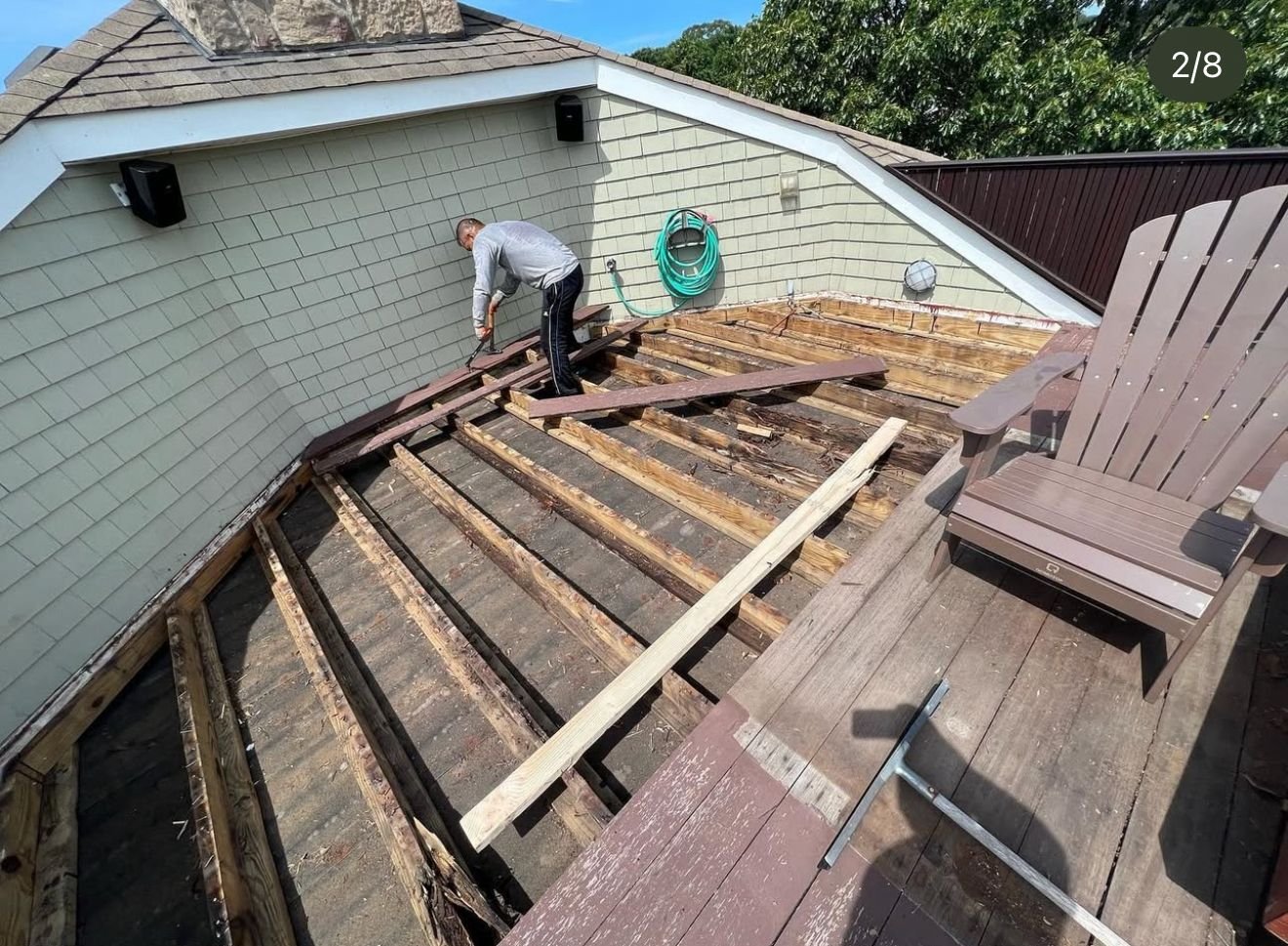
If you already notice movement, broken boards, sagging, or a loose stair tread, explain that before the visit. Keep people away from the affected area and arrange an assessment rather than trying to wash around the problem.
Do not use pressure washing as a test of whether old wood is sound. A damaged surface needs a repair decision, not a more aggressive cleaning pass.
The same applies to peeling coatings. If large areas are lifting, the job may need a separate discussion about surface preparation and refinishing. Washing alone should not be presented as a complete fix.
Separating cleaning from repair helps you spend money on the work the deck actually needs.
Plan around drying and any later finish
A cleaning appointment should leave room to inspect the result after the surface dries. Wet boards can hide differences in color and make a stain appear lighter or darker than it really is.
If painting or staining is planned afterward, confirm the coating manufacturer’s preparation and drying requirements. Do not assume that a deck is ready for a new finish because it feels dry in one sunny spot.
Shaded sections, joints, and areas close to the house may behave differently. Weather can also affect the schedule.
For a seasonal property, allow time between cleaning and departure. That gives you a chance to check the agreed areas and discuss any remaining marks before furniture is covered or access becomes difficult.
Reduce the chance of another round of leaf stains
The simplest maintenance habit is to remove fallen leaves before they sit in wet piles. A soft broom or another method approved for your decking can help with routine debris removal.
Check beneath movable furniture and containers when it is safe to do so. Avoid dragging heavy planters across the surface. Review mats and protective pads against the decking manufacturer’s guidance before leaving them in place for long periods.
Between professional visits, watch for changes rather than judging the deck only by its color. A recurring stain, new movement, or a section that stays wet deserves attention.
For deck cleaning in Greenport, NY, request a free written estimate from Golden Hands Deck or call 631-655-5616. Share your decking material, photos of the marks, and whether you want cleaning alone or preparation for further maintenance.
Share


