
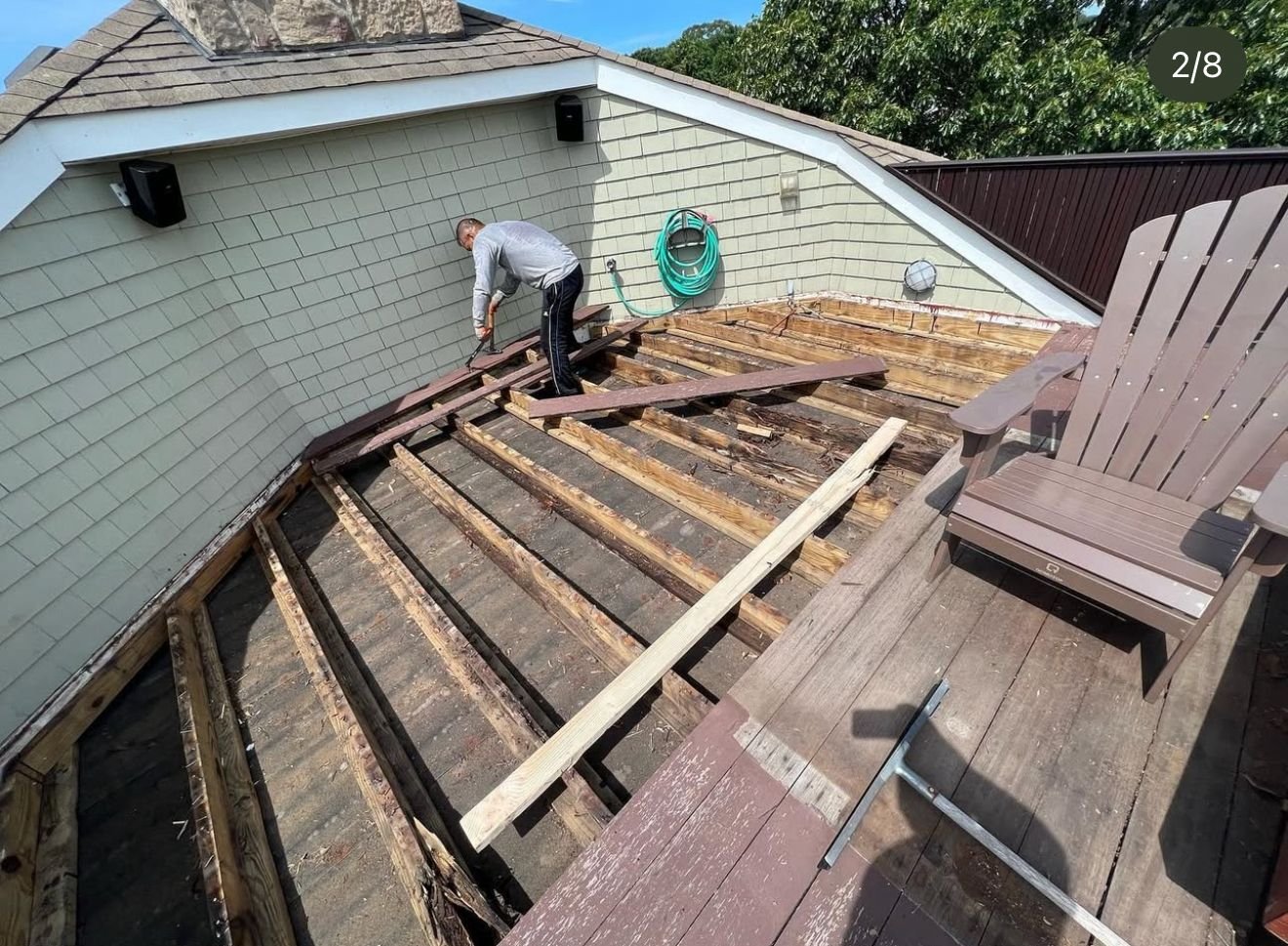

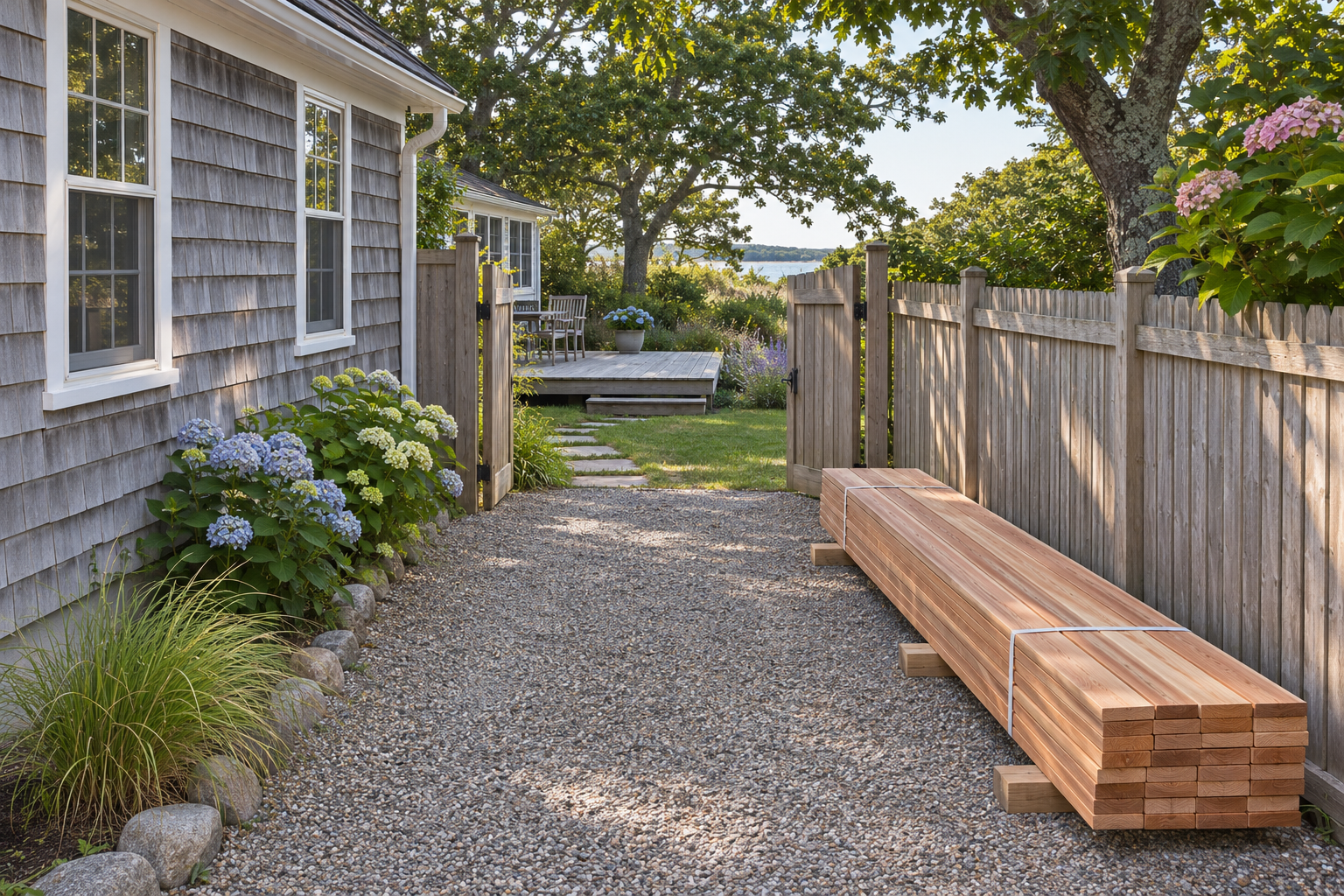
Before you order boards for a deck replacement on Shelter Island, walk from the driveway to the first deck step. Open the side gate all the way. Look at the turn beside the house. Picture someone carrying a long board around that corner while the other end is still in the driveway. That short walk can reveal a detail worth settling before the supplier loads the truck.
Homeowners usually know the size of the deck they want to replace. The less obvious question is how the boards will reach it and how the old material will leave. On Shelter Island, an off-island delivery also involves a ferry crossing. A good delivery plan gives the driver a place to unload, the crew a clear route to the deck, and your household a way to keep using the house while work is underway.
Check the turn beyond the gate
A gate can open wide enough for a person carrying a board, yet leave too little room for the board to turn. Imagine a side gate that opens onto a path between the house and a fence. You can step through and turn left in one motion. The front end of a long board needs room to swing before the back end has cleared the posts.
Open the gate as it would sit on delivery day and measure the usable space between its narrowest points. Then take two photos. Stand in the driveway for the first so the contractor can see the approach. Take the second from inside the yard, looking back toward the gate. A close-up with a tape measure shows the width. The wider view shows the turn, the downspout beside it, and the garden bed you want to protect.
Share those photos before the material order is final. If the route looks tight, ask the contractor to walk it with you. There may be a straighter approach from the other side of the house. If a different board length would make access easier, ask where the joints would fall on the finished deck before agreeing to the change.
Give a Shelter Island delivery a realistic arrival window
If your decking comes from off-island, ask the supplier which direction the truck will come from. The North Ferry connects Greenport with Shelter Island. The South Ferry connects North Haven with the island. Knowing the route helps you coordinate with the person meeting the truck. The Shelter Island Chamber of Commerce ferry guide identifies both crossings. Shelter Island Chamber of Commerce
For a delivery coming through Greenport, North Ferry boards vehicles in arrival order. The operator also notes that traffic, weather, and ambulance standby can affect departures. Arrange a delivery window and give the driver one number to call once the truck is on the island. That makes it easier to move a car or open a gate at the right time. Check the current North Ferry schedule when setting the delivery date. northferry.com
Choose where the boards will go before the truck arrives
“The driveway” can mean two different places. A driver might picture the open space in front of the garage. You might mean the strip along the fence because you still need to get a car out. Take a photo of the driveway and mark the proposed spot on it. Ask the supplier whether the driver can unload there with the truck and equipment being sent.
Then think through an ordinary morning with the boards in that spot. Can you open the garage? Can someone get from the front door to a parked car? Will the stack block the gate the crew needs to open? These are easy questions to settle while the driveway is empty.
It also helps to establish where the supplier’s work ends. Does the delivery include placing the boards near the deck, or will the driver leave them at the driveway for the crew to carry? If you are comparing deck replacement options, ask each contractor to describe that part of the job in the written estimate. Two estimates are easier to compare when both cover the same distance from truck to deck. goldenhandsdeck.com
Leave a route for the old deck to come out
A replacement sends material in both directions. The new boards may arrive neatly bundled, while the old boards and rail sections leave in separate loads. If the new bundle sits just inside the only gate, it can take up the very space the crew expected to use for removal.
Ask the contractor to point out three places during the visit: where the new boards will sit, where removed material will go, and which path connects each spot to the deck. On a property with one narrow side yard, the order of work matters. It may make sense to clear the old material before the new delivery. On a property with room for both, the supplier and crew may have more flexibility.
Mention any part of that route your household relies on. A side gate might be the usual way to take the dog out. A back door might be the easiest entrance for a family member. Telling the crew early gives everyone time to agree on another route while that entrance is out of use.
What to put in the written estimate
For a Shelter Island project, ask who arranges delivery, whether the quoted delivery charge includes the ferry crossing, who carries the boards from the unloading spot, and who removes the old decking. If the estimate says “materials delivered,” a good follow-up is, “Delivered to which spot on my property?” A single clear sentence can settle that question before work starts.
The most useful thing to have ready for an estimate is often a photo of the whole route. A picture of the worn deck tells the contractor what you want replaced. A second picture from the road, with the driveway and side gate in view, helps explain what it will take to get the work done.
Planning a deck replacement on Shelter Island? Request a free written estimate from Golden Hands Deck or call (631) 655-5616. Include a photo of the deck and its narrowest access point so the team can discuss delivery and removal with you.
Share
Related Posts

November 17, 2026
Cedar Deck Restoration in Peconic, NY – Bring Your Wood Deck Back to Life
A faded, rough or discolored cedar deck does not necessarily need to be replaced. With…
November 16, 2026
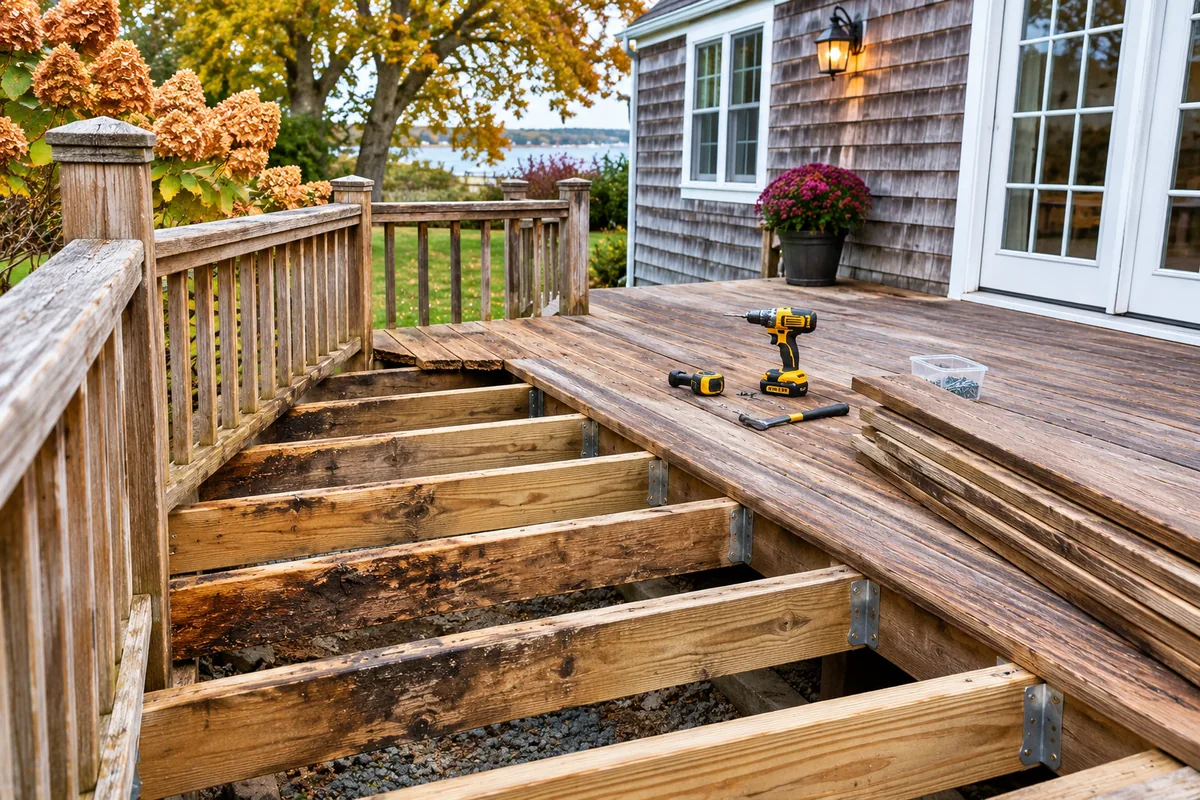
Deck Joist Repair in Mattituck, NY – Fix Hidden Structural Damage
A deck does not have to look old to have structural problems. Even when the…
November 15, 2026
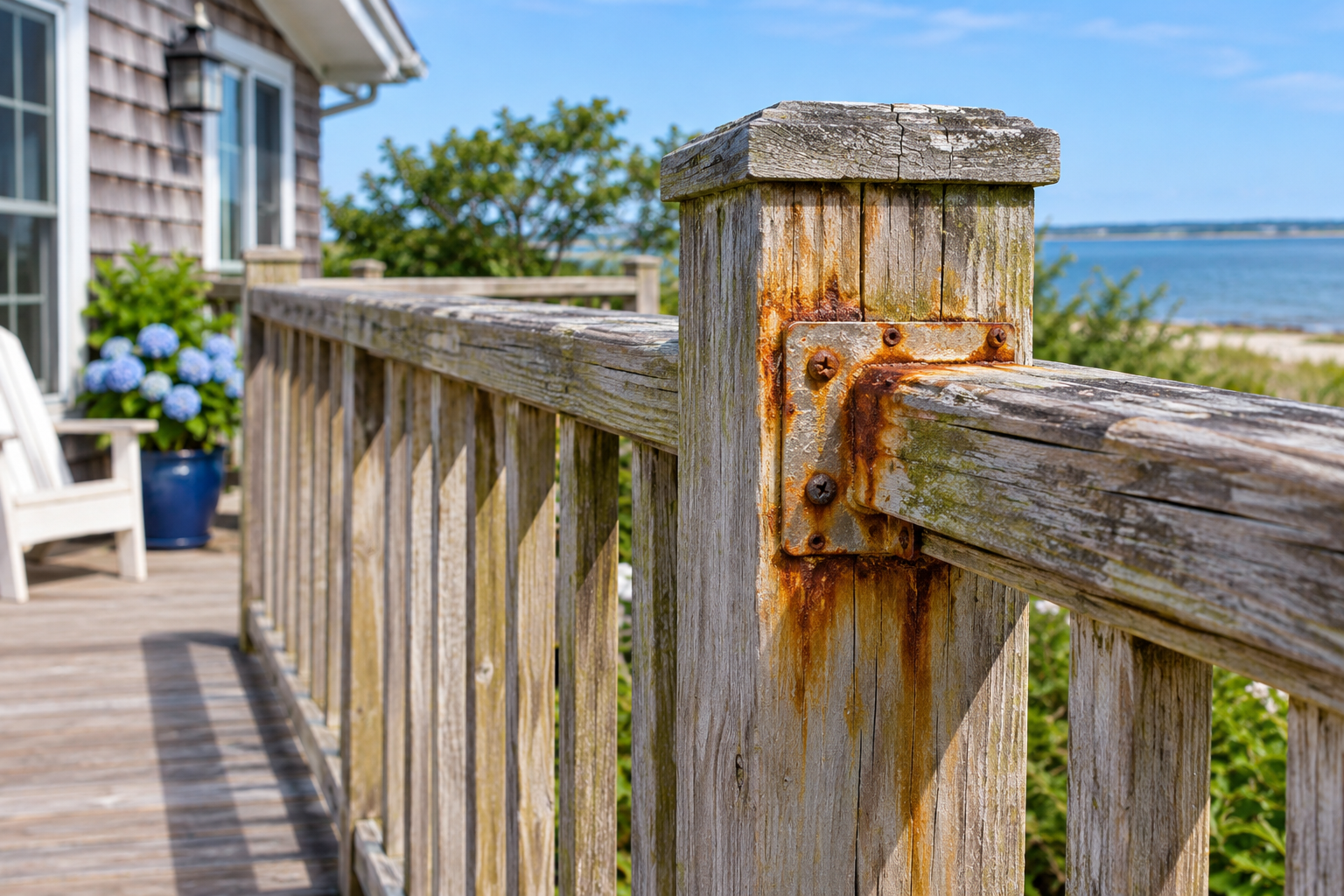
Deck Railing Repair in Orient, NY – Protect Your Deck From Coastal Corrosion
A deck railing can look perfectly fine from a distance while the metal connections holding…
November 14, 2026
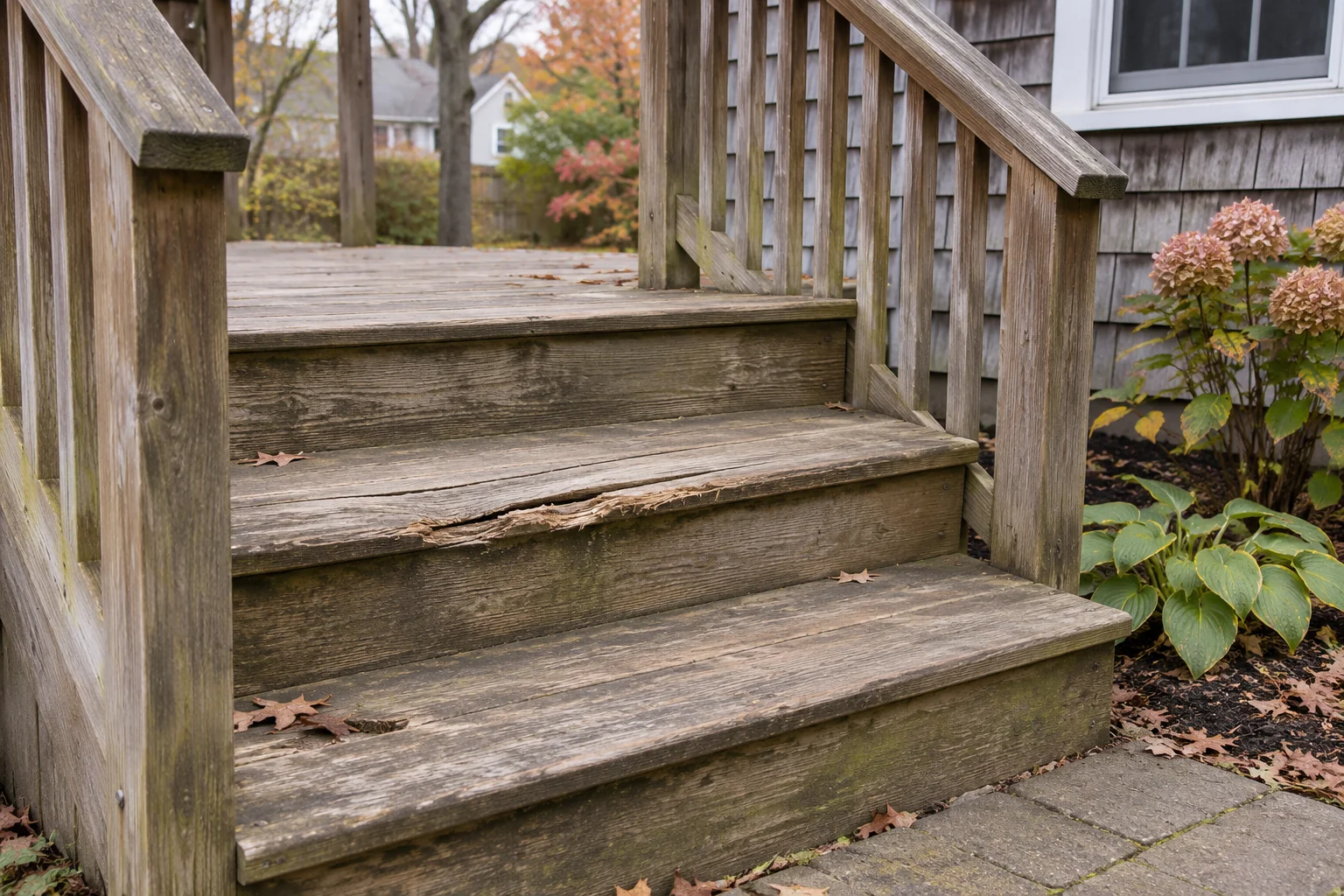
Deck Stair Tread Repair in Laurel, NY
A split board on a deck step may look like a small repair. But replacing…


