

A mild afternoon can make deck painting seem like a simple weekend job. But warm air at lunchtime does not tell you whether the boards are dry enough or whether the coating will have suitable conditions overnight.
Before scheduling deck painting in Peconic, NY, consider the whole job. Preparation, surface moisture, application conditions, and drying time all affect when the work should begin.
Golden Hands Deck provides deck services in Peconic, including deck painting. A useful assessment helps you decide whether the surface is ready, whether repairs should come first, and whether the proposed schedule allows the selected coating to perform.
A warm afternoon is only part of the decision
The temperature shown on a weather app usually describes the air. The deck surface can be warmer or cooler, depending on sunlight, shade, and its surroundings.
Benjamin Moore’s exterior painting temperature guidance explains that surface temperature, humidity, and weather all matter. It also stresses that individual products have their own application limits, listed on the label or technical data sheet. Benjamin Moore
That means there is no single temperature rule for every deck paint or stain. A product suitable for one set of conditions may not suit another.
Ask which coating is proposed before agreeing to an application date. The contractor should assess the forecast against that product’s requirements, rather than treating one pleasant afternoon as enough evidence to begin.
Confirm what is already on the boards
Deck paint, solid-color stain, and penetrating stain are different products. Their preparation needs and maintenance options can differ too.
If you have an old container, invoice, or product record, share it during the estimate. Explain whether the last finish was applied to bare wood or over an earlier coating.
A surface may also have several histories. Replacement boards, heavily worn walking routes, and sheltered sections can respond differently during preparation.
Benjamin Moore’s deck-staining guide treats preparation as a decision based on the wood’s condition and its previous finish. Benjamin Moore
Avoid choosing a new product by color alone. Confirm that it is intended for the material, the existing surface, and a horizontal walking area.
If the deck contains composite boards, identify the product before discussing any coating. Do not assume a finish intended for wood is appropriate.
Let preparation determine the schedule
A painting date should follow the preparation plan, not force it.
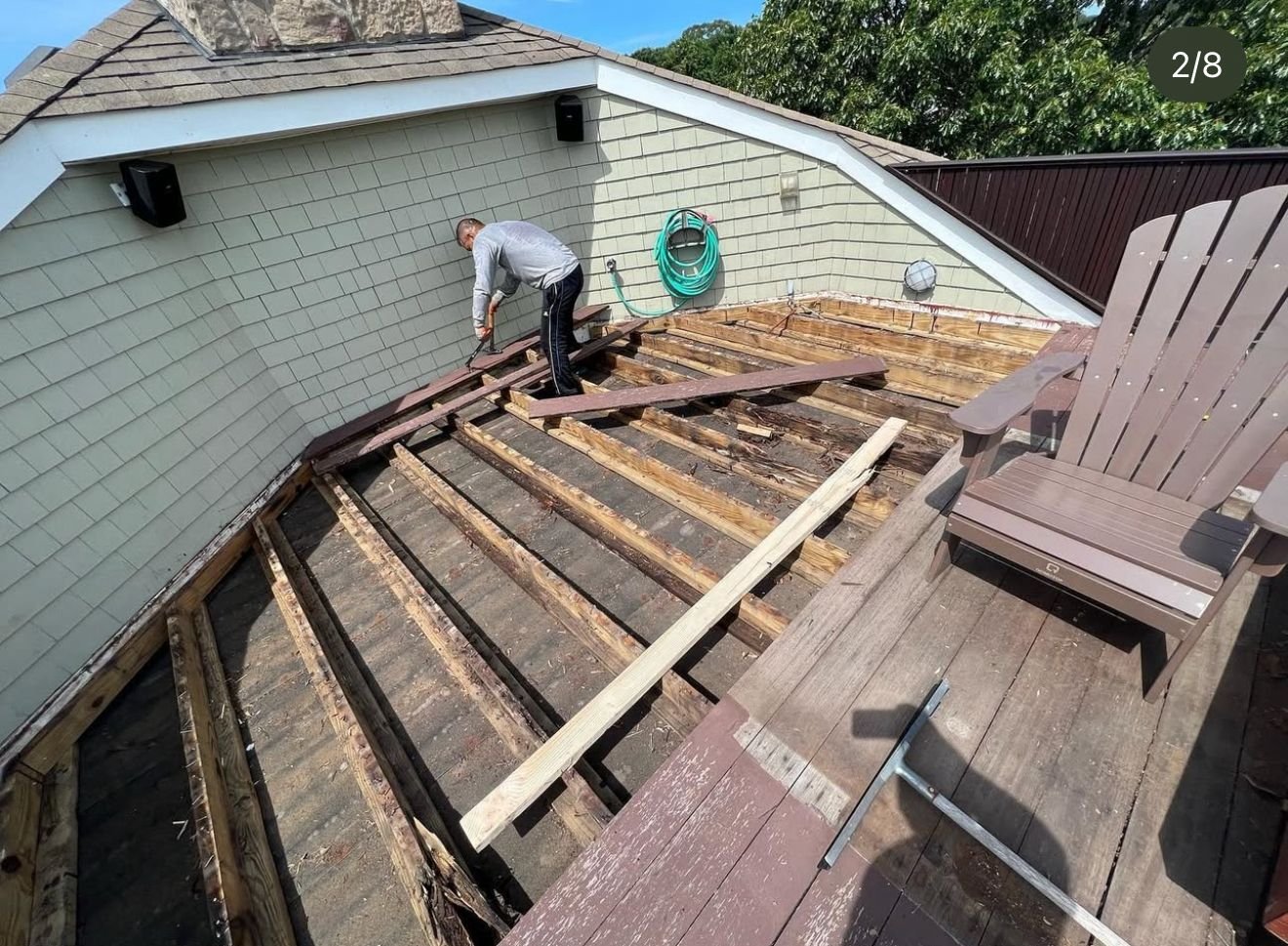
The contractor may need to address dirt, loose coating, uneven surfaces, or damaged boards before application. Each task changes what must happen next.
Ask whether the quote includes only washing and coating or more extensive surface preparation. “Prep included” is too vague to explain what you are buying.
Discuss how the surface will be assessed after preparation. A clean-looking board is not automatically ready for a finish, and a recently washed deck may need more time before the next stage.
For a Peconic property that is being closed for the season, avoid setting the final coat immediately before departure. Leave room for weather changes, review of the work, and the required return-to-use period.
Allow time after washing or rain
The end of a rain shower does not establish that a deck is ready to coat.
Some areas may remain damp longer than others. Boards near the house, shaded corners, and sections beneath movable items deserve attention during the assessment.
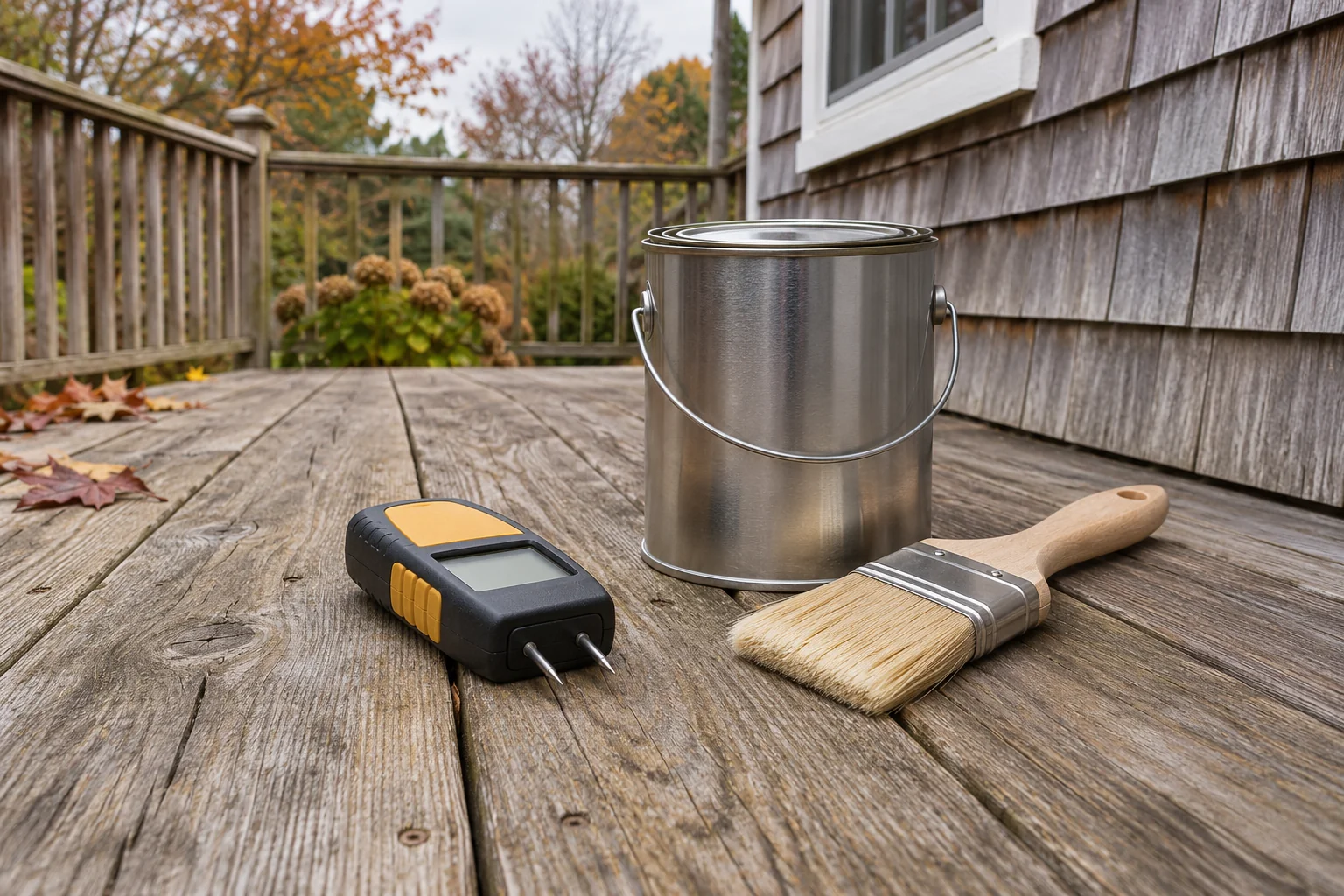
Ask how the contractor will determine whether the wood meets the selected product’s moisture requirements. A fixed promise such as “we always paint the next day” does not account for every surface and weather condition.
The same principle applies after cleaning. Preparation and application may need separate visits.
If more rain arrives between them, the contractor may need to reassess the surface before continuing. Build that possibility into the schedule rather than treating it as an unexpected change.
Check the weather beyond the application hours
A forecast should cover more than the period when someone is holding a brush.
The coating may need suitable conditions after application, including protection from rain or moisture for the interval specified by its manufacturer. The requirements can differ between products.
Benjamin Moore notes that dew, rain, temperature, and humidity can affect exterior painting. Its guidance also distinguishes surface temperature from air temperature. Benjamin Moore
Ask the contractor what conditions would cause a delay and how that decision will be communicated.
A clear weather policy helps both sides. You know why a visit may move, and the contractor has room to follow the product instructions.
Do not ask for a guaranteed completion date that depends on weather unless the agreement clearly explains those limits.
Repair concerns should come before a new finish
Painting can change a deck’s appearance. It cannot secure a loose railing or restore the strength of damaged wood.
Tell the contractor about moving boards, unstable steps, broken edges, or any area you have stopped using. These concerns need assessment before they disappear beneath a fresh finish.
Do not test a questionable board by repeatedly stepping on it. Keep people away from the affected section until it has been reviewed.
If repairs are recommended, ask how they relate to the painting scope. New boards may need different preparation from the surrounding surface.
The quote should explain which repairs are included and how additional findings will be documented and approved. That makes it easier to distinguish necessary work from a purely cosmetic update.
Plan when you can use the deck again
A surface that feels dry may still need more time before normal use.
Ask for the selected product’s instructions for foot traffic, furniture, and other items. Do not assume those intervals are identical.
Arrange an alternative route if the deck serves a frequently used door. Move furniture and planters before work begins, and agree on who will return them when the coating is ready.
Keep pets away from the work area and drying surface. For a seasonal home, share the restrictions with anyone checking or maintaining the property.
Request the product name and care instructions at handover. Those records will help with later cleaning, touch-ups, and maintenance decisions.
Compare quotes by preparation and finish
A lower total may reflect a smaller scope rather than better value.
Check whether quotes cover the same walking surface, stairs, railings, and edges. Confirm the proposed coating, preparation method, number of coats where specified, and cleanup.
Ask how existing loose finish will be handled and whether the proposed appearance is realistic for the deck’s condition.
A solid-color finish may change the look substantially. A more transparent finish may leave differences between older and replacement boards visible.
The goal should be agreed before work starts. Are you preserving visible grain, changing color, or renewing an existing opaque finish? Those choices affect both preparation and the finished result.
Know when waiting is the better plan
Sometimes the right outcome of an autumn assessment is to complete necessary repairs and schedule coating for a later suitable period.
That decision should follow the surface condition and product requirements. It should not rely on a blanket claim that every deck must be painted before winter or that every late-season job must wait until spring.
If coating is postponed, ask what maintenance is appropriate in the meantime and what should be reassessed before application.
You can still use the estimate to settle the scope, choose a finish, and plan access. That preparation makes a future booking more useful than a rushed application.
For deck painting in Peconic, NY, request a free written estimate from Golden Hands Deck or call 631-655-5616. Share the existing finish, any repair concerns, and your preferred timing so the proposed work fits the deck’s condition.
Share
Related Posts
November 5, 2026
Deck Painting in Wainscott, NY: Why Paint Peels and When to Repaint
Deck painting in Wainscott, NY, can restore the appearance of an aging outdoor space, but…


