

A composite deck may need less routine upkeep than a wood deck, but winter still brings maintenance questions. Which shovel can you use? Is ice melt suitable? What should you do if a board moves beneath the snow?
Composite deck winter care in Hampton Bays, NY, starts with knowing the decking product and checking its care instructions. The right approach protects the surface while helping you spot concerns that need more than seasonal maintenance.
Golden Hands Deck provides deck services in Hampton Bays, including composite decking and repairs. Before cold weather limits access, take time to review the boards, stairs, and routes your household uses.
Identify your composite decking before winter
“Composite” describes a material category, not one set of maintenance rules. Different brands and product generations can have different care requirements.
Look for your installation invoice, warranty paperwork, or leftover boards. Save the product name and the manufacturer’s care guide somewhere easy to find. If another person maintains the property, share those details with them.
Do not assume a gray board is a particular brand or that every section of the deck uses the same product. Past repairs may have introduced different materials.
If you cannot identify the boards, explain that when arranging an assessment. Avoid applying an unfamiliar chemical or trying an aggressive cleaning method while the material remains uncertain.
Choose snow tools that suit the boards
A tool that works on a driveway may be too harsh for a deck surface.
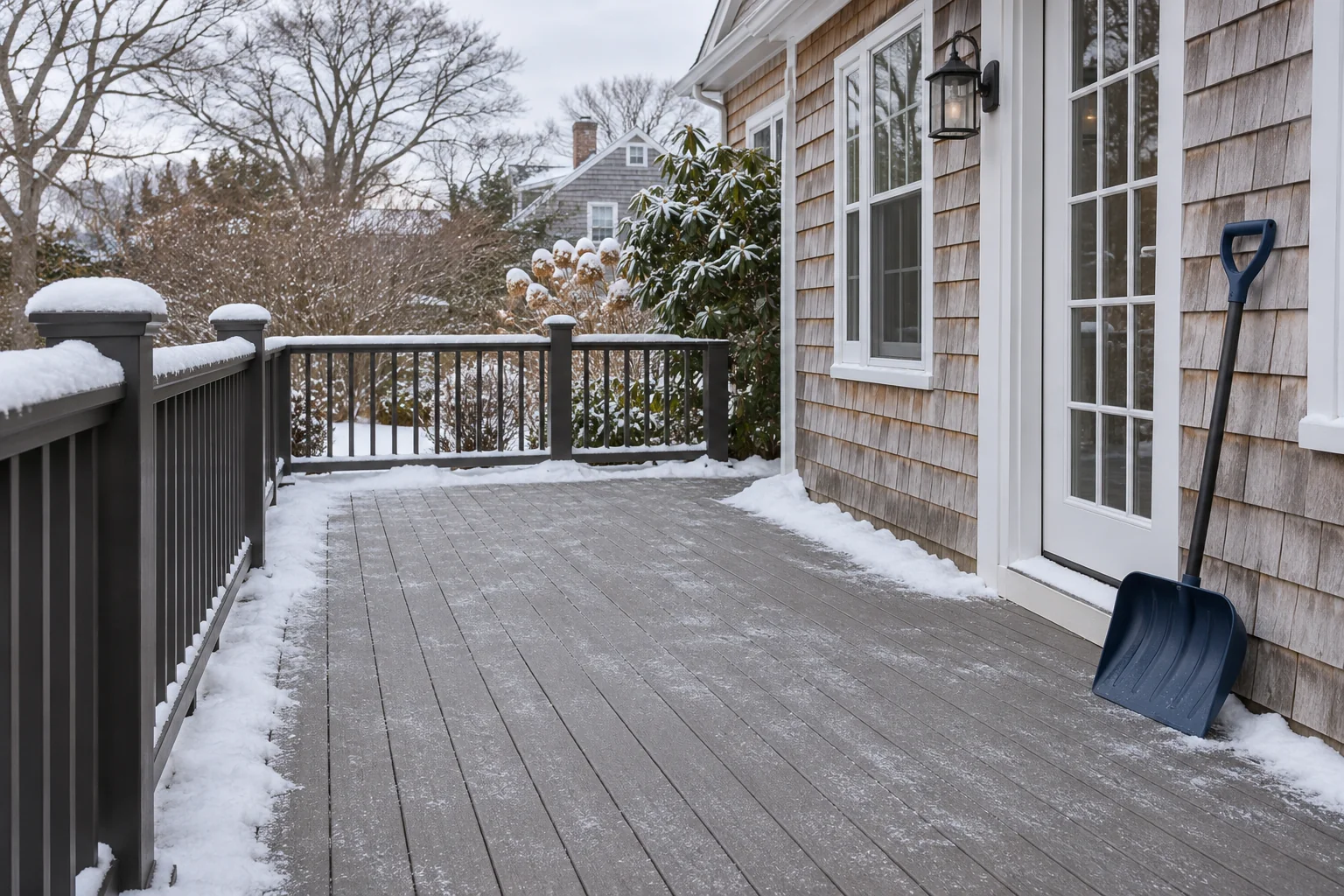
In its winter care guidance, Trex recommends a broom for a light dusting and a plastic shovel for snow removal on the product lines discussed. It also advises working in the direction of the boards to reduce accidental damage. Metal shovels can scratch composite decking. Trex
Check the blade itself before using a shovel. Some plastic shovels have a metal wear strip along the bottom.
The aim is to manage snow without scraping the decking aggressively. If ice is bonded to the boards, do not treat the surface like concrete or attack it with a sharp tool.
Only attempt routine snow removal when you can reach and use the area safely. An icy stair or unstable railing needs a different response from a light covering on an otherwise sound platform.
Check ice-melt compatibility before buying
Do not choose an ice-melt product only because the front of the bag says it is suitable for outdoor use.
Trex’s current care and cleaning page permits calcium chloride or rock salt for the decking covered by its snow-and-ice guidance. Its instructions for early-generation decking also call for rinsing residue when practical. These directions should not be extended automatically to other brands or every blended deicer. Trex
Check both the decking instructions and the full product label. Follow the stated application directions rather than assuming more product will work better.
Consider nearby surfaces too. Railings, metal fittings, door thresholds, and planting may have their own care needs.
If compatibility is unclear, ask the decking manufacturer before applying the product. Keep the packaging so you can identify what was used if discoloration appears later.
Plan winter access around how you use the deck
Some Hampton Bays homeowners use their deck daily. Others may leave it largely unused until warmer weather.
Decide which doors, stairs, and paths your household needs. Discuss any essential access route before winter, especially if the deck connects a frequently used door to the yard.
Move portable items that obstruct that route while conditions are safe. Do not drag heavy furniture across the boards or shift large planters without suitable help.
For a seasonal property, leave clear instructions for the person checking the house. Include the decking product, approved maintenance information, and any area that should remain out of use.
This preparation is more useful than expecting someone unfamiliar with the deck to choose tools and treatments during a storm.
Separate surface care from repair concerns
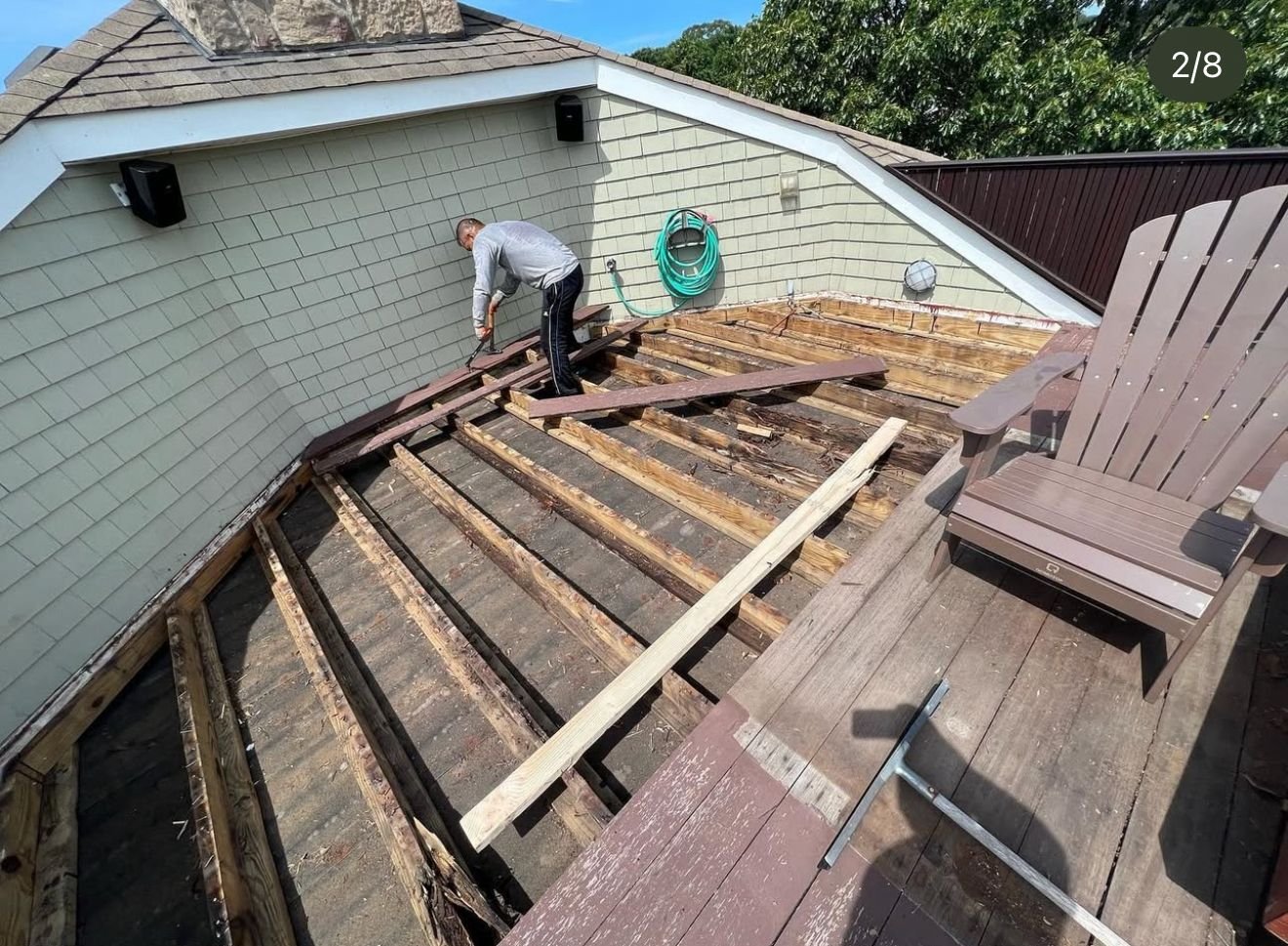
Snow removal does not correct a loose board, damaged stair, or unstable railing.
If you have already noticed movement, raised edges, broken boards, or loose connections, arrange an assessment before snow hides those details. Tell the contractor where the concern appears and when you first noticed it.
Do not walk repeatedly over a questionable section to test it. Keep people away from the affected area.
Photos taken in clear conditions can help explain the problem when requesting a visit. They cannot establish that the framing or connections are safe.
Golden Hands Deck’s Trex decking service provides a starting point for discussing composite materials and project options. Explain whether you want an existing deck assessed or are considering replacement.
Do not judge snow capacity by appearance
Composite boards are only the visible walking surface. The deck also depends on its framing, supports, connections, and foundations.
An attractive surface does not tell you how much snow the complete structure can safely carry. Neither does the apparent thickness of the boards.
Avoid relying on a universal snow-depth rule found online. The condition and design of the actual deck matter, and snow conditions vary.
If you notice sagging, unusual movement, or another concern, stay off the deck and seek an appropriate assessment. Do not climb beneath it to investigate while it is loaded.
For an elevated deck or a structure with an uncertain history, discuss existing records and any need for further evaluation before winter becomes the first test of its condition.
Inspect visible changes after conditions improve
When the deck is accessible and safe to view, look for changes rather than judging only whether the snow has gone.
Notice new scratches, lifted board edges, damaged railing sections, or marks where furniture stood. Record what you can see without removing boards or probing connections.
A surface scratch and a moving board require different decisions. Keep those concerns separate when describing the work you want.
If residue remains, return to the care instructions for the actual product. Avoid pressure washing during freezing conditions or attempting a stain treatment simply because it worked on another outdoor surface.
A short record of the tools and products used can help explain what happened and guide the next maintenance decision.
Ask for a repair quote with a clear scope
If winter reveals damage, explain the problem before asking for a price. Include the decking brand if known, photos of the affected section, and whether movement or cracking was present before the snowfall.
Ask the contractor to distinguish surface treatment from board replacement, fastening work, and any investigation of supporting components.
Replacement boards may differ in shade or texture from older material. Discuss product availability and the likely appearance before approving the work.
A useful written quote should identify the included areas and explain how additional findings will be documented and approved. It should also account for access if snow, furniture, or an enclosed underside limits the assessment.
For composite deck winter care and repair planning in Hampton Bays, NY, request a free written estimate from Golden Hands Deck or call 631-655-5616. Share your decking details and any existing concerns so the discussion focuses on the work your property needs.
Share


