

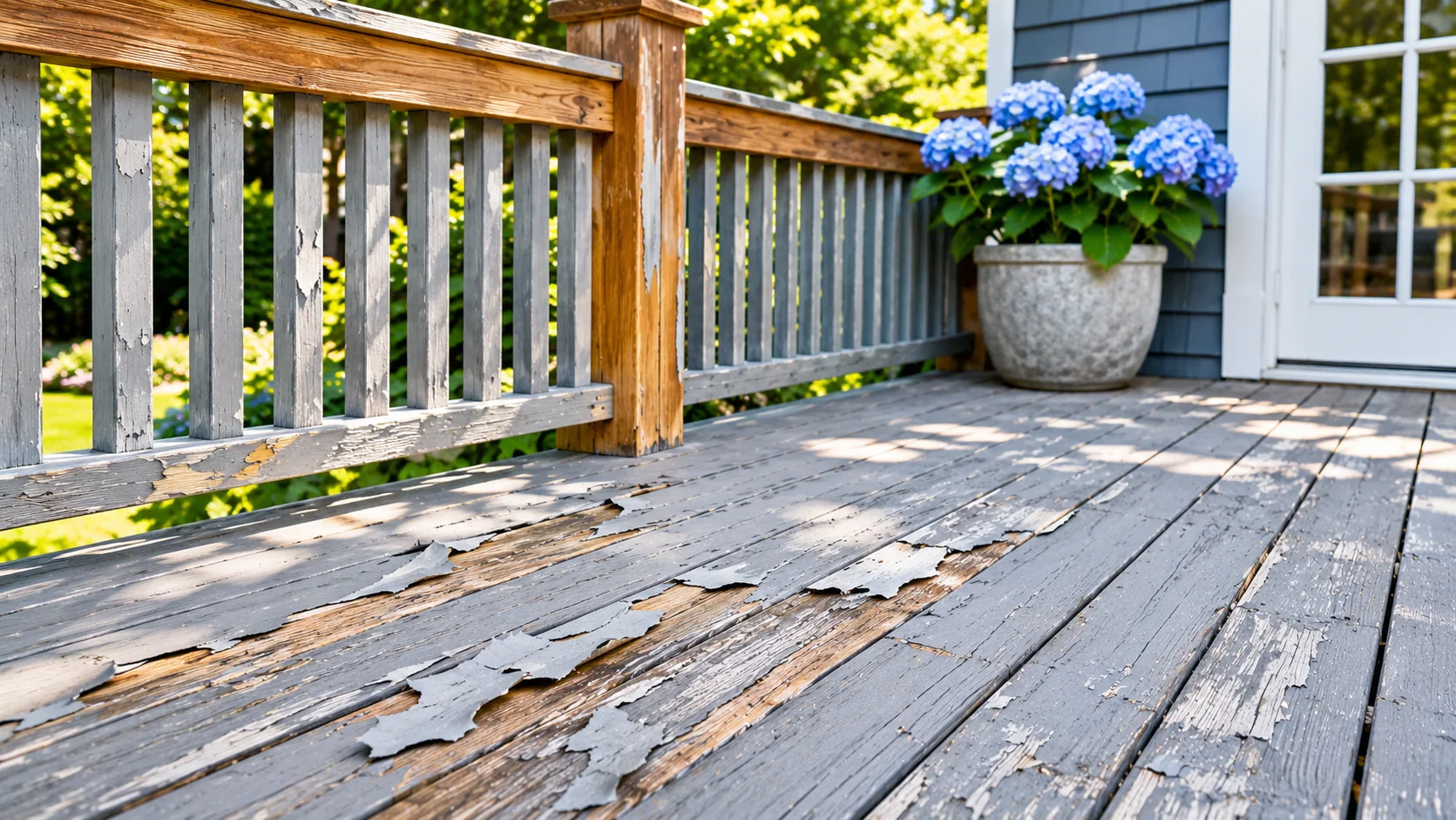
Deck painting in Wainscott, NY, can restore the appearance of an aging outdoor space, but applying a new coat over peeling paint rarely solves the underlying problem. If your deck’s finish is cracking, flaking, or lifting away from the wood, it is important to understand what caused the damage before repainting.
Outdoor decks face constant exposure to sunlight, rain, humidity, and changing temperatures. These conditions can gradually weaken protective coatings, especially when the original surface was not prepared correctly.
For homeowners in Wainscott and the surrounding Hamptons, a peeling deck can be frustrating. What once looked like a clean, attractive outdoor living space may develop bare patches, uneven colors, and worn walking surfaces.
Fortunately, peeling paint does not always mean the deck needs replacement.
Sometimes, proper preparation and refinishing are enough. In other situations, moisture damage or deteriorating boards must be addressed first.
This guide explains why deck paint fails, what to inspect before repainting, and when professional deck repairs may be necessary.
Why Deck Paint Peels on Long Island
Paint forms a coating over the wood surface. To perform as intended, that coating needs a suitable surface, correct preparation, and appropriate application conditions.
When one of these factors is missing, the finish may begin separating from the wood.
Several causes are particularly relevant to exterior decks.
Moisture Trapped in the Wood
Moisture is one of the common reasons exterior coatings fail.
Wood naturally expands and contracts as its moisture content changes. When paint cannot maintain its bond with the surface, cracking and peeling can develop.
Rainwater, condensation, and damp conditions may contribute to the problem.
The Sherwin-Williams guide to exterior paint peeling explains how moisture exposure can contribute to paint losing adhesion.
For decks, moisture can remain around joints, between boards, and in shaded areas that dry slowly.
If new paint is applied before the wood is sufficiently dry, the coating may fail prematurely.
Poor Surface Preparation
Painting over dirt, loose paint, mildew, or deteriorated surface fibers can prevent a new finish from bonding properly.
Even high-quality exterior paint cannot compensate for an unsuitable surface.
Old coatings may need to be evaluated and prepared before a new finish is applied.
According to Sherwin-Williams’ deck preparation guidance, the surface should be clean, dry, and free of contaminants before staining or painting.
Proper preparation is one of the most important parts of a refinishing project.
Sun Exposure and Temperature Changes
Decks in Wainscott experience warm summers and colder winter conditions.
Sunlight and temperature fluctuations can contribute to gradual wear in exterior coatings.
A deck with full afternoon sun may weather differently from one surrounded by shade.
The finish selected should be suitable for exterior decking and the expected exposure conditions.
Applying the Wrong Product
Not every exterior paint is designed for deck floors.
Walking surfaces experience foot traffic, furniture movement, and other wear that exterior walls do not.
A coating intended for siding may not be suitable for deck boards.
Before painting, the product should be checked for compatibility with the wood, the existing finish, and horizontal walking surfaces.
Signs Your Deck Needs Repainting
Peeling paint is an obvious warning sign, but other changes can indicate that a deck’s finish needs attention.
Paint Is Flaking Off in Multiple Areas
Small sections of loose paint can develop into larger patches if the underlying cause remains untreated.
If peeling occurs across much of the surface, the old finish may require more extensive preparation before repainting.
Simply coating the affected areas may leave the new paint attached to an unstable layer underneath.
Bare Wood Is Becoming Visible
When paint wears away, exposed wood may experience additional moisture and sunlight.
A worn finish does not automatically mean the boards are damaged, but leaving deteriorating surfaces unattended can make maintenance more difficult.
The condition of the exposed wood should be checked before applying another coating.
The Surface Has Uneven Color
Some color fading is normal as outdoor finishes age.
However, large differences in appearance may indicate uneven weather exposure, worn coating layers, or previous repairs.
If the paint is still firmly attached, certain areas may need different preparation from sections where the finish has failed.
Paint Is Peeling Around Stairs and Railings
Stairs and railings often have joints, corners, and areas where moisture can collect.
These components also experience regular contact and wear.
If paint is peeling around connections, inspect the underlying wood and hardware for visible damage.
An unstable railing or deteriorated stair should be assessed before any cosmetic work begins.
Should You Repaint a Deck or Remove the Old Paint?
The correct approach depends on the existing coating.
A deck with a mostly sound finish may need less preparation than one where paint is lifting across large sections.
However, applying new paint directly over loose or incompatible coatings is unlikely to produce a durable result.
When Repainting May Be Enough
Repainting may be appropriate when the wooden boards remain in good condition, the existing coating can be properly prepared, and the selected finish is compatible.
The surface needs to be cleaned and allowed to dry according to the coating manufacturer’s instructions.
Any loose paint must be addressed using appropriate methods before the new finish is applied.
When Old Paint Needs More Extensive Removal
Widespread peeling, thick failing paint layers, or incompatible previous coatings can require additional preparation.
The exact method depends on the age of the coating, wood condition, and safety considerations.
Aggressive sanding or pressure washing can damage wood and may introduce other risks.
For older homes, the possibility of lead-based paint must also be considered before disturbing existing coatings.
Why Painting Over Peeling Paint Is a Poor Investment
Imagine repainting a deck without addressing the loose coating underneath.
The new paint may initially cover the visible damage and make the deck look refreshed.
However, if the old paint continues separating from the wood, the new layer may peel with it.
The homeowner may then need to repeat much of the work.
Correct preparation helps avoid this unnecessary expense.
Older Wainscott Homes May Need Lead Paint Precautions
Some homes in the Hamptons were built before 1978.
Older painted surfaces may contain lead-based paint, and disturbing them can release hazardous dust or chips.
The U.S. Environmental Protection Agency’s Renovation, Repair and Painting Program explains the rules and precautions for work involving lead-based paint in older residential properties.
Before scraping or sanding old coatings, homeowners should determine whether lead-safe work practices and a properly certified contractor are required.
This is especially important when the age or composition of the existing coating is unknown.
Do not assume old deck paint is lead-free based on its appearance.
When Deck Painting Is Not Enough
A fresh finish can improve appearance, but it cannot restore the strength of deteriorated wood.
Certain conditions require repairs before painting.
Rotten or Soft Deck Boards
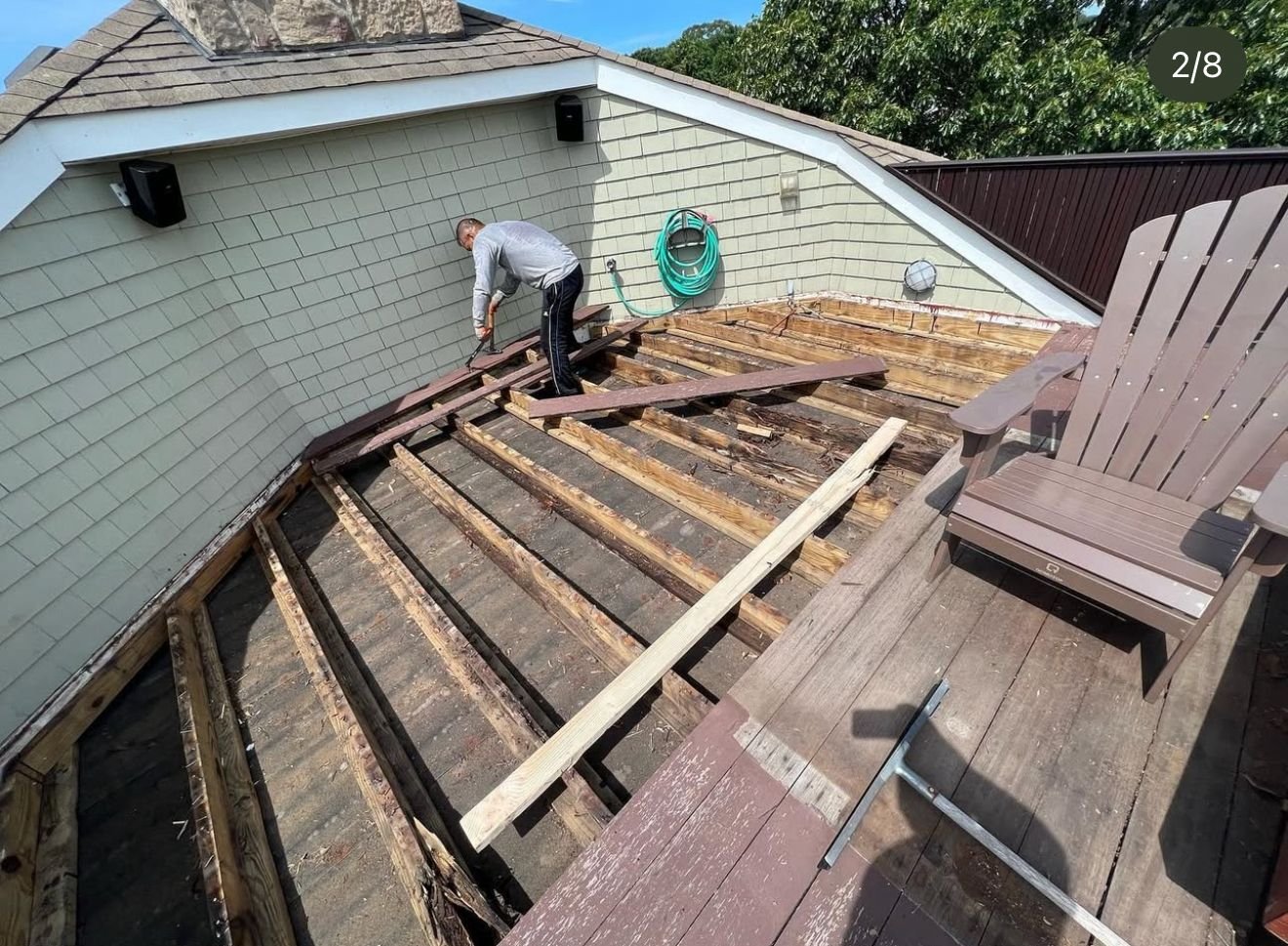
If boards are soft, crumbling, or severely deteriorated, applying paint will not restore their structural condition.
Affected components should be evaluated.
Depending on the extent of the damage, individual boards or larger sections may require replacement.
Loose Decking Boards
A board that moves under normal use may have loose fasteners or problems with the supporting framing.
These issues should be addressed before refinishing.
A freshly painted surface should never conceal unresolved safety concerns.
Cracked Railings and Damaged Stairs
Railings and stairs are important parts of a deck’s usability and safety.
Significant cracks, unstable posts, or damaged stair components require assessment.
Cosmetic improvements should come after necessary repairs.
Structural Problems Beneath the Surface
Sometimes, damage extends beyond the visible boards.
If joists, beams, posts, or connections are deteriorating, a larger repair project may be required.
Golden Hands Deck also provides deck repair and replacement services for homeowners whose decks need more than surface refinishing.
Deck Painting vs. Deck Staining
Homeowners often compare paint and stain when refreshing a wood deck.
Both can change the appearance of the wood, but they work differently.
Deck Painting
Paint generally provides more opaque color coverage.
It can be useful when a homeowner wants a consistent color that complements the house or outdoor furniture.
However, an opaque coating may hide the natural grain and can require substantial preparation when it begins peeling.
Only products intended for the particular deck surface should be considered.
Deck Staining
Deck stains come in different levels of transparency and color coverage.
Some allow the natural grain to remain visible, while others provide a more uniform appearance.
Certain penetrating stains behave differently from film-forming coatings and may have different maintenance requirements.
The best choice depends on the wood species, existing finish, desired appearance, and exposure.
Which Is Better for Wainscott Decks?
Neither option is automatically better for every deck.
A homeowner who wants to preserve visible wood grain may prefer a compatible stain.
Someone seeking a specific opaque color may prefer an appropriate deck coating.
The existing surface is also important. Switching between finishing systems may require additional preparation or removal of previous coatings.
Before choosing, consider how much ongoing maintenance you are willing to perform.
How Professional Deck Repainting Works
A professional refinishing project should begin with an assessment of the existing surface.
The contractor should determine whether the deck is suitable for repainting or needs repair first.
Inspecting the Deck
The inspection begins with visible conditions.
The contractor looks for deteriorated boards, loose components, and areas where the existing finish has failed.
Accessible supporting elements may also need attention if there are signs of structural damage.
Preparing the Wood
Preparation may include suitable cleaning, removing loose coating material, and addressing rough or deteriorated surface areas.
The specific methods depend on the coating, wood condition, and applicable safety precautions.
Nearby siding, plants, and outdoor furnishings should be considered when planning the work.
Allowing Suitable Drying Conditions
Wood should reach the condition required by the coating manufacturer before application.
Drying time depends on weather, moisture exposure, and the products used.
Painting during unsuitable weather can affect coating performance.
Applying the Appropriate Finish
The selected coating should be compatible with the deck material and prepared surface.
The manufacturer’s instructions determine application methods, coverage, environmental limits, and when the deck may be used again.
Rushing the process can reduce the quality of the finished surface.
How Much Does Deck Painting Cost in Wainscott, NY?
Deck painting costs vary based on the deck’s size, condition, and preparation needs.
A deck with an existing finish in good condition may require less work than one with extensive peeling.
Removing failing coatings can increase labor.
Additional factors include the number of stairs, railings, access to the work area, coating selection, and whether damaged boards need repair.
A contractor may also recommend separate work for structural issues discovered during the assessment.
Homeowners should request a written estimate that explains the preparation, materials, and finishing work included.
This makes it easier to understand what they are paying for and whether repairs are part of the proposed scope.
How to Help New Deck Paint Last Longer
Even a properly applied finish requires maintenance.
Routine cleaning can help remove dirt and debris that collect on the surface.
Leaves and other material should not be allowed to sit in damp areas for extended periods.
Check for changes around board ends, stairs, railings, and areas with frequent foot traffic.
Avoid using harsh cleaning chemicals unless they are compatible with the coating.
When moving outdoor furniture, take care not to scrape or damage the finish.
Inspect the surface periodically for early signs of wear.
A small area of coating failure may be easier to address before deterioration spreads, provided the underlying cause is identified.
There is no single repainting schedule suitable for every deck. Material, coating type, weather exposure, and maintenance all affect the service life of a finish.
Frequently Asked Questions About Deck Painting
Can you paint over peeling deck paint?
Painting directly over loose paint is not recommended. Failing coatings need appropriate preparation before a new finish is applied.
Why does deck paint peel after winter?
Moisture, temperature changes, poor adhesion, and existing coating problems can contribute to peeling. The actual cause should be identified before repainting.
Is deck paint better than stain?
It depends on the desired appearance, wood condition, existing coating, and maintenance preferences. Neither is universally better for all decks.
Can a rotten deck be repaired with paint?
No. Paint does not restore the strength of rotten boards or structural components. Damaged wood must be properly evaluated and repaired or replaced.
How often should a painted deck be repainted?
There is no universal interval. Coating performance depends on the product, surface preparation, weather exposure, foot traffic, and maintenance.
Should I hire a contractor to repaint an old deck?
Professional service can be helpful when there is widespread peeling, significant wood damage, an unknown existing coating, or potential lead-paint concerns.
Get a Free Deck Painting Estimate in Wainscott, NY
Peeling deck paint does not always mean you need a new deck.
Sometimes, proper surface preparation and a compatible finish can restore the appearance of your outdoor space. In other cases, damaged boards or structural concerns should be addressed before painting begins.
Golden Hands Deck provides deck painting, repair, replacement, and other decking services throughout its Long Island service areas, including Wainscott and neighboring Hamptons communities.
With more than 15 years in business, Golden Hands Deck offers licensed and insured services, clear written quotes, and free estimates.
Whether your deck needs repainting, surface preparation, or more extensive repairs, Golden Hands Deck can help you explore the appropriate options.
Call (631) 655-5616 or request a free deck painting estimate for your Wainscott, NY, property.
Share


